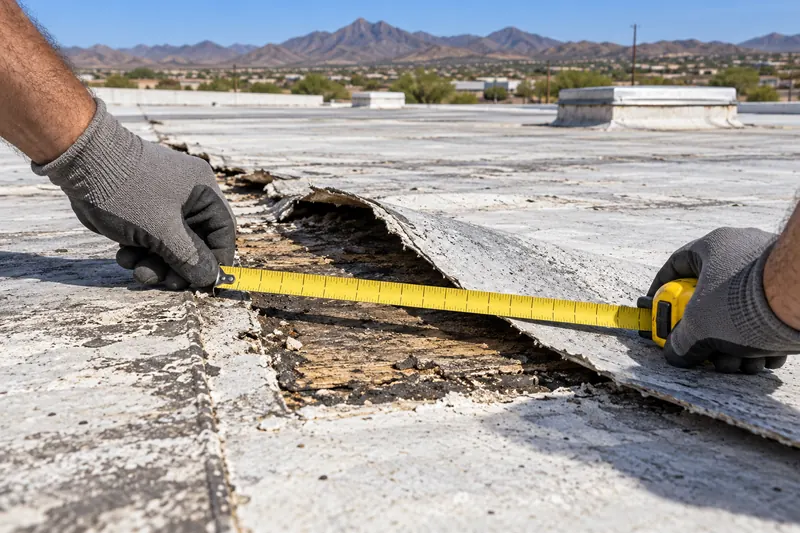
Patch Edges Peeling Up
Each old patch has its own edge, and wind finds them all. Peeled edges let water travel between layers before it shows inside.

As a Tumacacori-Carmen commercial roofing contractor, we repair and replace roofs on small commercial and farm-support buildings, starting with a count of the layers on the deck.
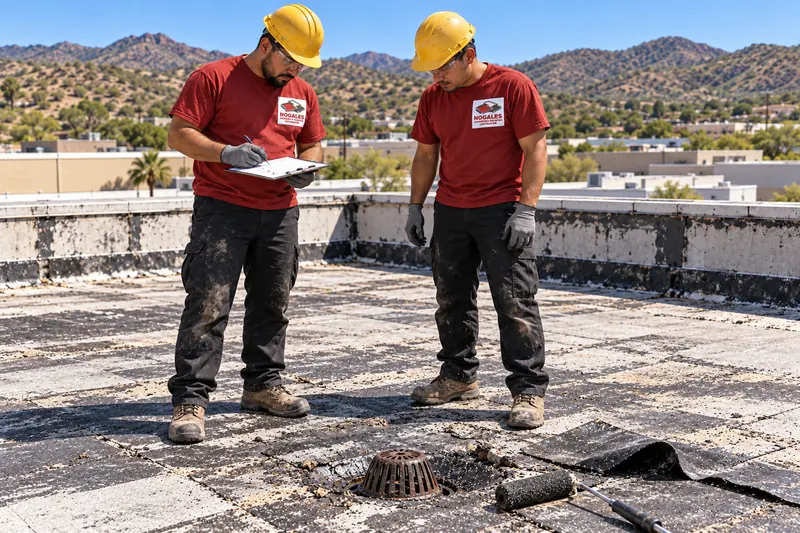
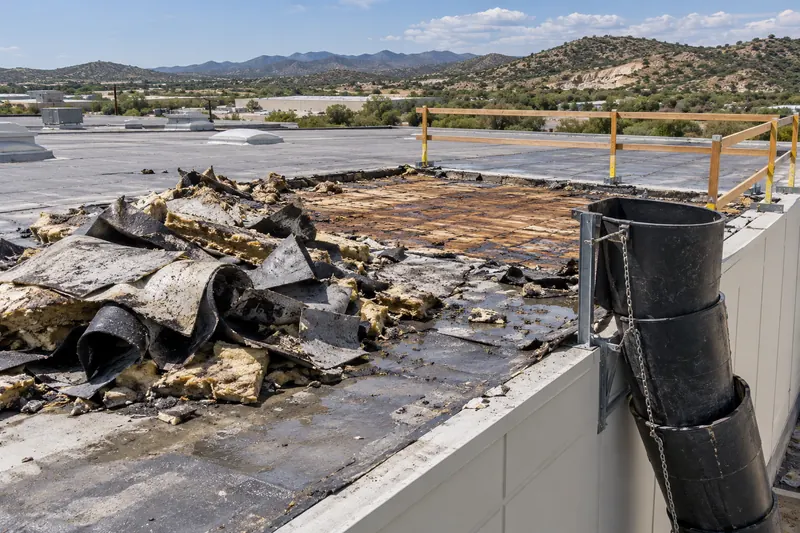
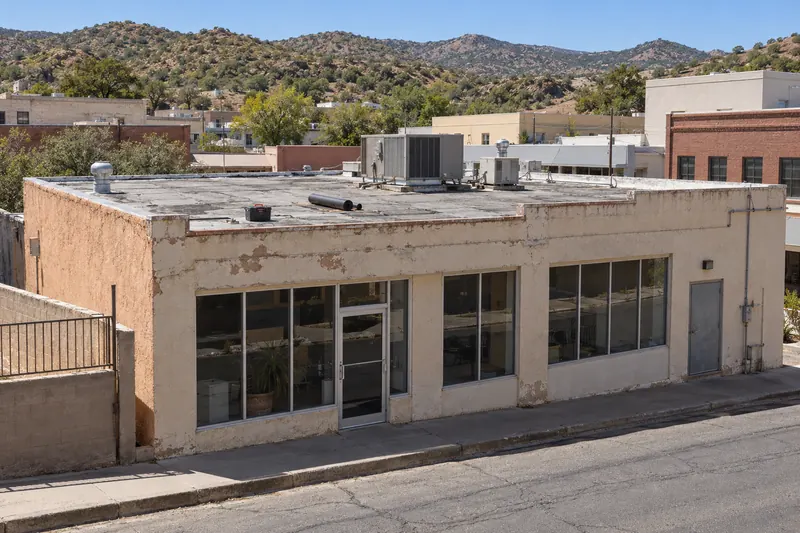
Older small buildings along I-19 often carry a patch, then a recover, then another patch. Local code limits how many roof layers a building can have, so the count decides whether a new roof can go over the old one or the old roofs come off first.
Santa Cruz County's building department lists the 2012 International Building Codes as effective in unincorporated areas like Tumacacori-Carmen. We cut cores to count layers and confirm the scope with the county.
Small commercial and farm-support roofs here wear out in four familiar ways.
Each old patch has its own edge, and wind finds them all. Peeled edges let water travel between layers before it shows inside.
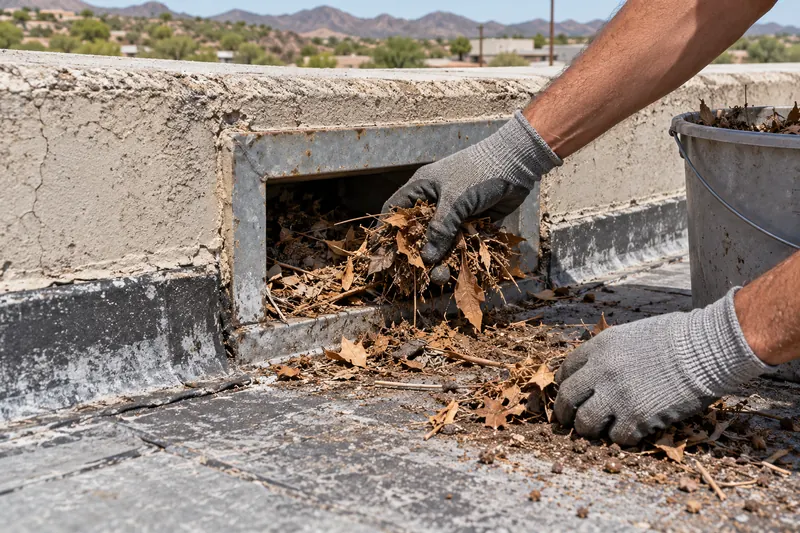
Small roofs with one or two scuppers flood fast when those outlets fill with leaves. Water rises over the base flashing at the walls.
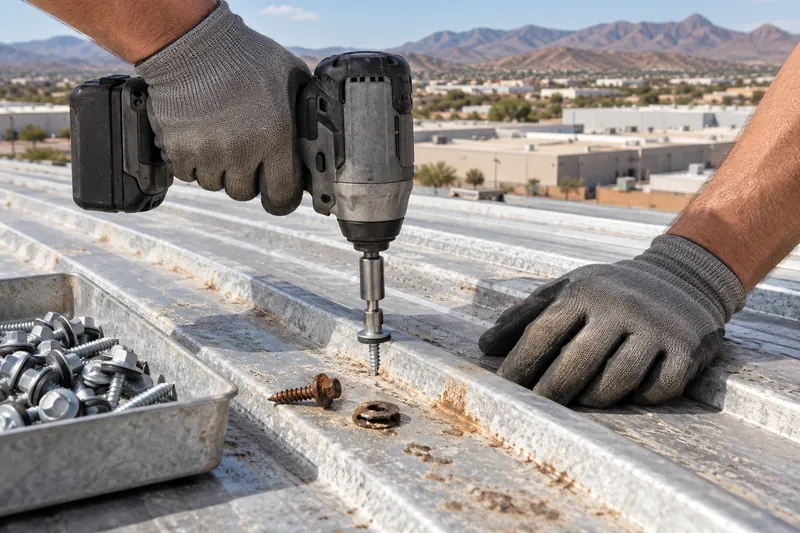
Metal storage and equipment buildings lose fastener grip as panels move through hot days and freezing nights. Rust stains around screw heads show where water gets in.
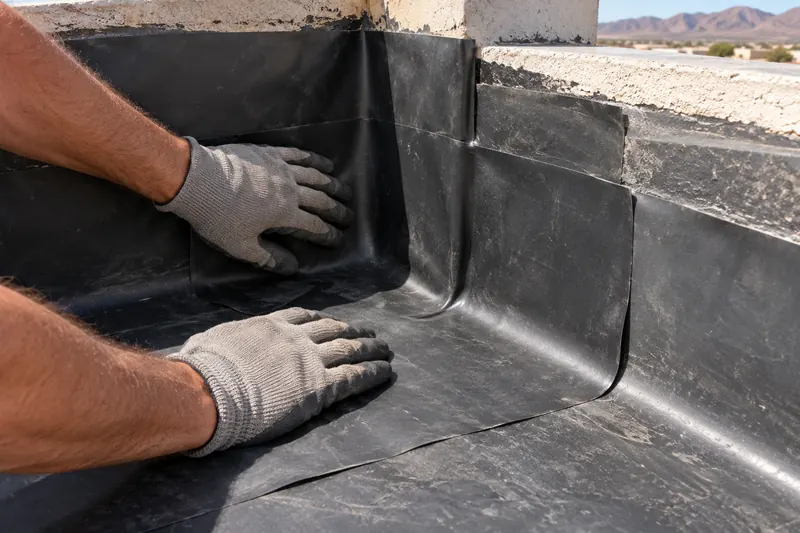
Where several roofs stack up at a wall, the newest flashing seldom ties into the oldest. Corners split and water runs between the layers.
Starting from the deck gives an older building one roof, with no hidden layers holding water.
Small commercial roofs here take a membrane or metal, set by the slope.
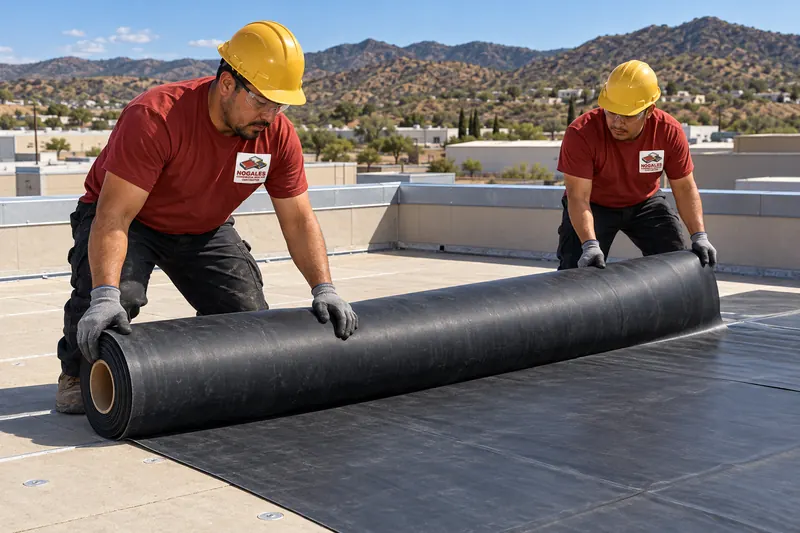
Rubber membrane for small flat roofs once old layers are stripped, with corners and scuppers flashed by hand.
EPDM roofing in Nogales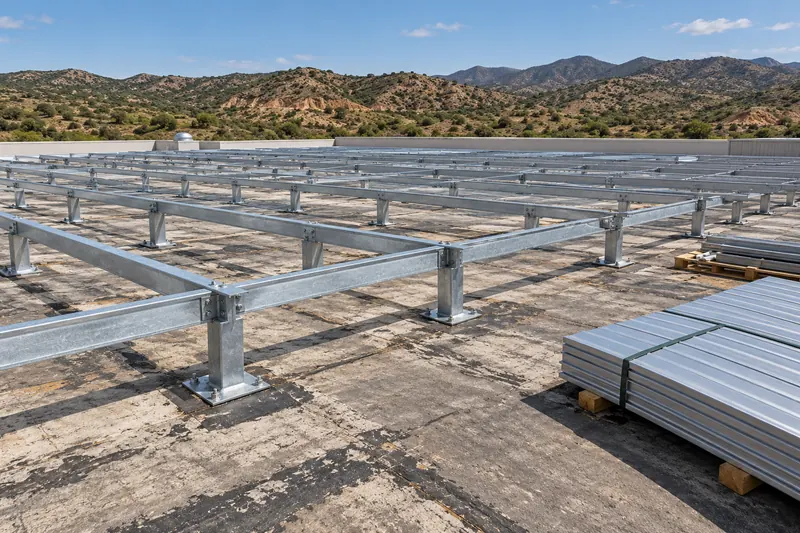
Panels for farm-support buildings, and retrofit framing where a flat roof keeps ponding.
Commercial metal roofing in Nogales
White welded membrane for small offices and shops with cooled space under a flat roof.
TPO roofing in NogalesCall and tell us how many times the spot has been patched. Repeat leaks on older roofs usually mean water is moving between layers, and a core cut shows it fast.
+1 (623) 310-0169Small buildings get the same careful sequence as large ones, sized to the roof.
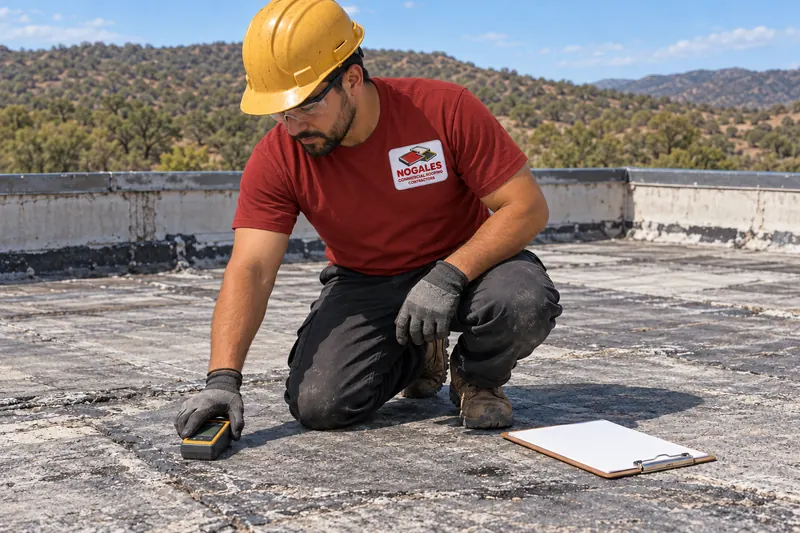
Moisture readings, a core cut to count layers, and a walk of the walls, scuppers, and any rooftop units. The layer count goes straight into the recover-or-tear-off call.
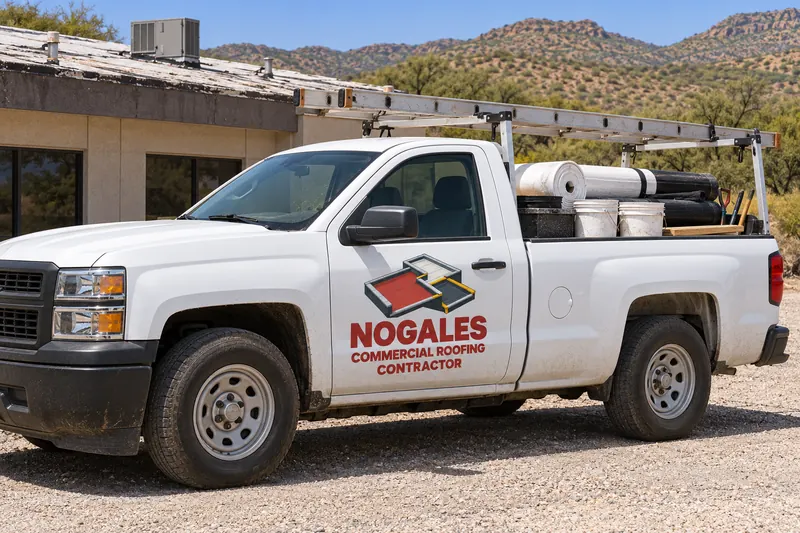
A small lift or hand-carry route keeps parking and doors clear. Materials arrive ready for the roof sections planned for each day.
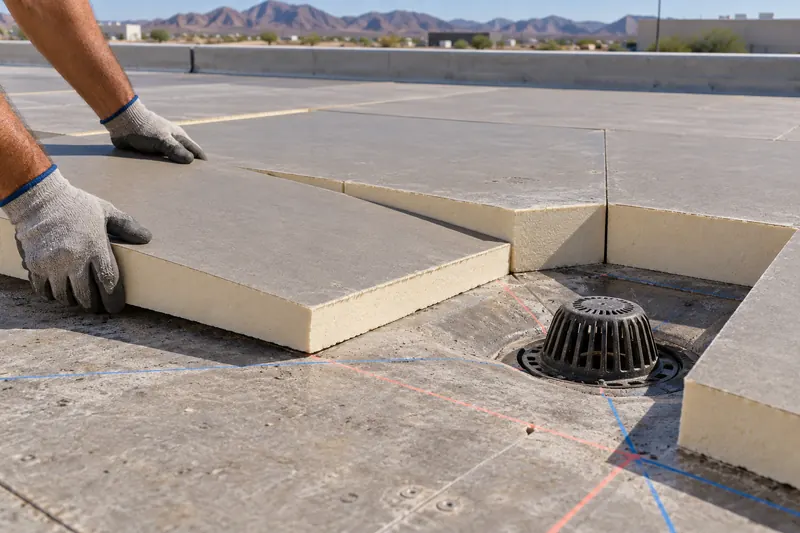
Old layers and wet boards come off to the deck, and new insulation goes down with slope toward the scuppers.
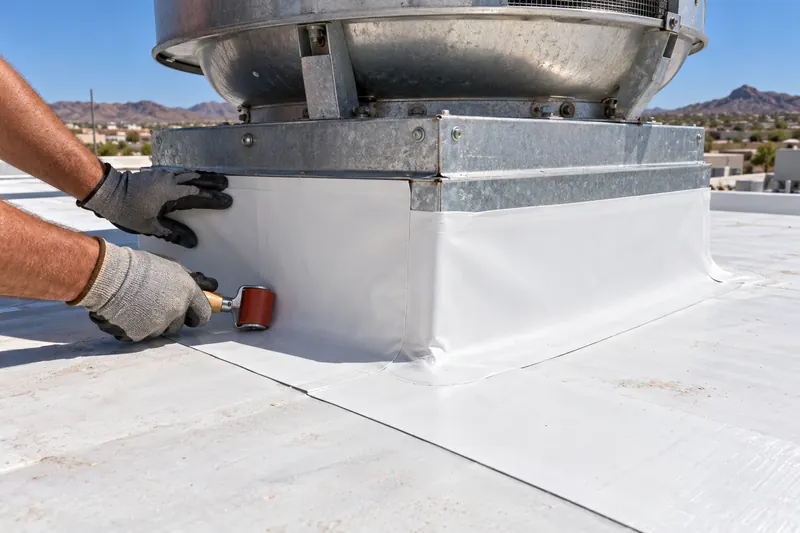
Rooftop units, vents, and pipes get new curbs or boots sized to the new roof height. Old flashing buried between layers comes out with the layers.
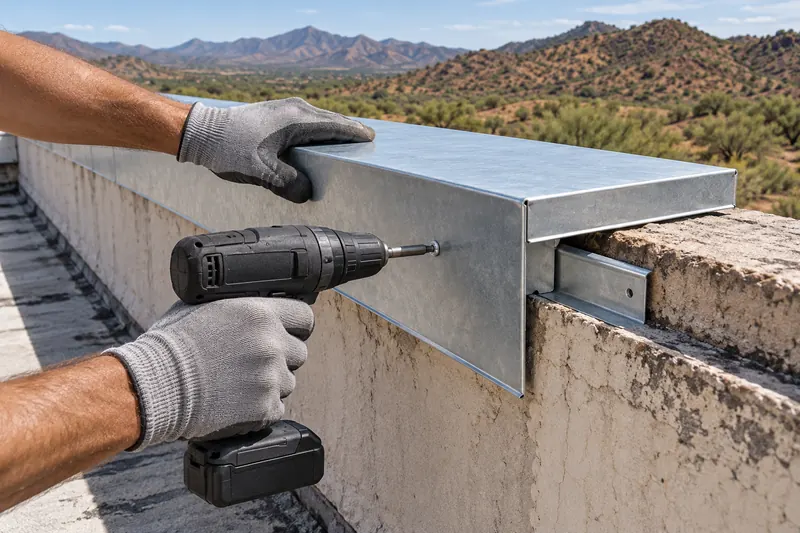
Parapets, coping, and scuppers get new flashing, and each section is sealed before evening. You walk the finished roof with us at the end.
Tumacacori-Carmen sits on I-19 between Rio Rico and Tubac.
Repair fits when damage stays in a few areas and the rest of the roof is solid. Replacement wins when wet insulation, failed seams, or leaks keep spreading. On older Tumacacori-Carmen buildings the layer count matters too: when code rules out another recover, the old roofs come off before anything new goes on.
A small core cut through the roof down to the deck shows every layer stacked in cross-section. We patch the core hole on the same visit and use the count, plus moisture readings, to decide between recover and tear-off.
Only when the old roof is dry and the deck carries fewer layers than code allows. Wet layers trap water against the deck, so they come off either way. A recover also raises the roof, so scupper openings, curb heights, and coping have to be checked against the new thickness.
Tumacacori-Carmen is unincorporated, so permits go through the Santa Cruz County Building Department. We confirm what the roof scope requires before work starts, since a tear-off, a recover, and a repair can each call for different paperwork.
Yes. Metal storage and equipment buildings get fastener replacement, new panels, or new trim, and flat-roofed farm offices get membrane roofs. Buildings used seasonally are scheduled for their quiet months, so equipment and stored goods can be moved clear of the work.
Water that gets in at one patch can travel between old layers before it drips inside. The stain moves, the patches follow it, and the real opening stays hidden until a core shows the path.
Debris goes down a chute into a covered bin, and the ground below the work gets swept daily. On small buildings the work area is short, so each section opens and closes fast.
Size, the number of layers to remove, scupper and parapet work, and the system chosen drive the price. Tear-off of several old layers costs more than a simple recover, which is why the layer count comes first.
Tell us how old the roof is and how often it has been patched. The first visit starts with a core and a layer count.
Leave your name and number and we will call you back about the building.
Or call now: +1 (623) 310-0169