As a Nogales commercial roofing contractor, we install, replace, and repair TPO, EPDM, industrial, and metal roofs on warehouses, cold storage, retail, and offices.
Slope, interior use, and rooftop equipment decide the system. The scale shows where each one fits before we ever climb your roof.
Flat To Low Slope
TPO Roofing
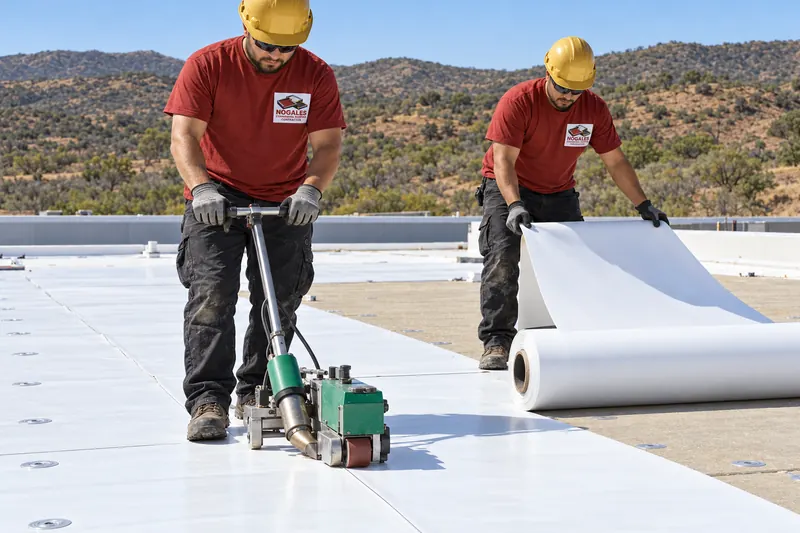
White heat-welded membrane for wide produce warehouses, retail strips, and offices. Long welded seams and a reflective surface suit cooled buildings that run refrigeration or air conditioning most of the year.
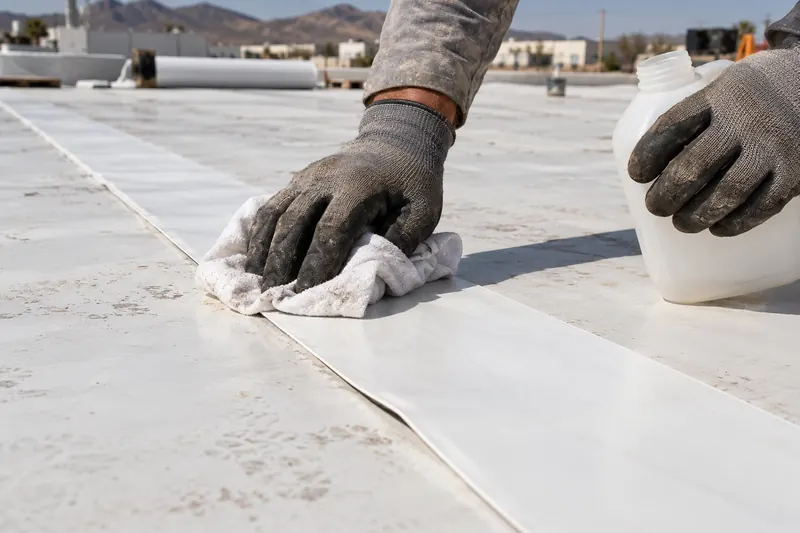
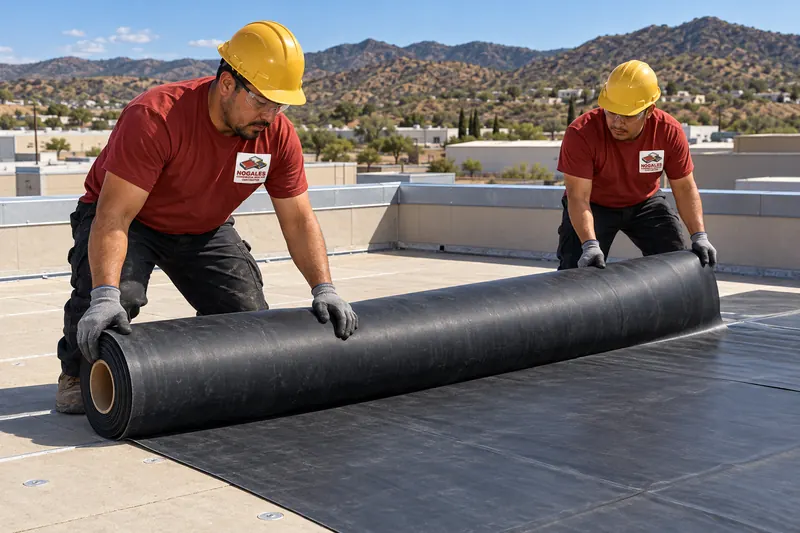
Rubber membrane that stays flexible through freezing nights and hot afternoons. It handles odd roof shapes and crowded penetrations, with seams taped and adhered at every lap.
Large-span roofs on distribution centers, cross-dock facilities, and plants. Work is phased in sections so loading lanes keep moving, with reinforced details at heavy equipment curbs and stacks.
Standing seam and structural metal for pre-engineered steel buildings, ag storage, and shops. Panels shed water fast, and fastener checks keep laps tight through the hot and cold seasons.
Every job starts on the roof itself. Five steps take a building from the first walk to a dried-in, flashed, and checked roof.
1
Step 1: Inspect Your Roof
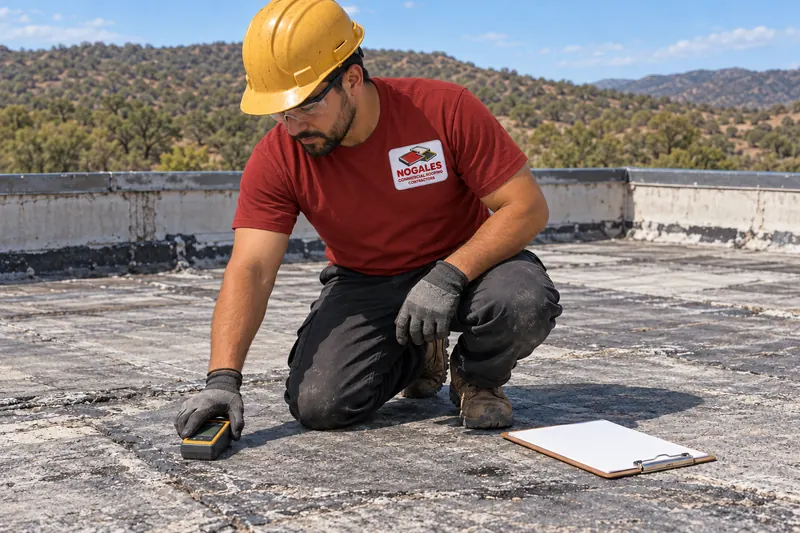
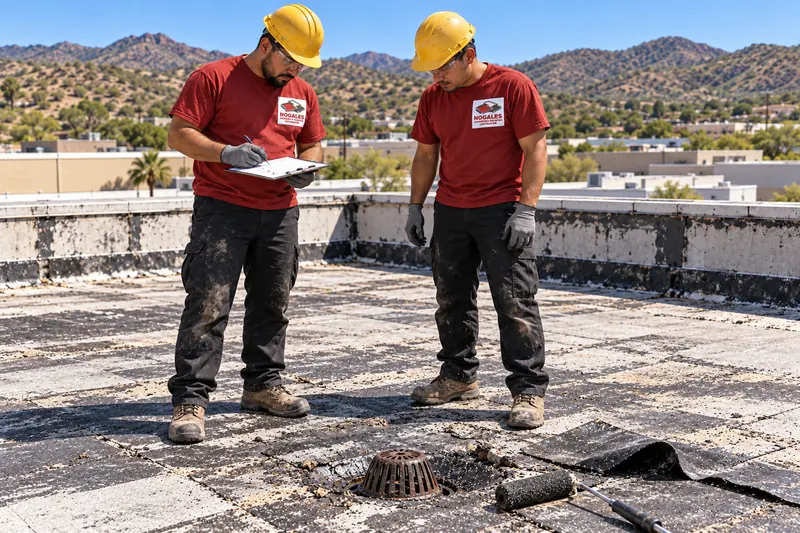
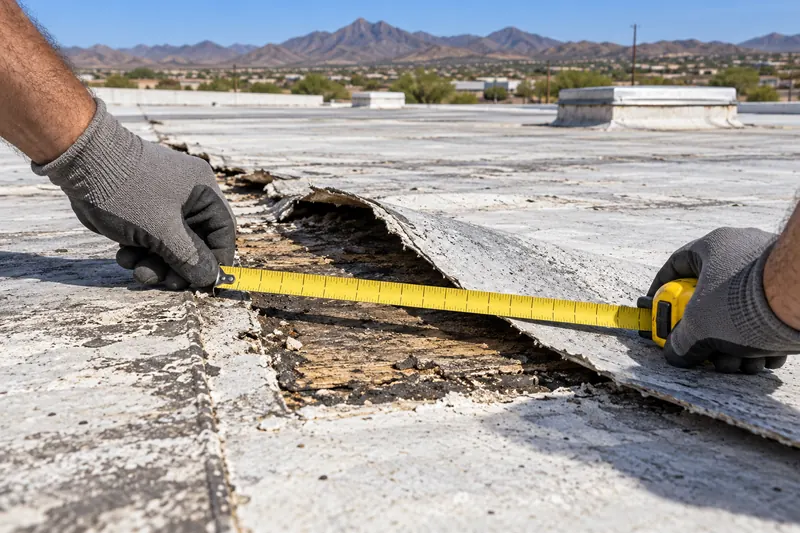
Moisture readings, core cuts where needed, and a walk of every seam, curb, drain, and edge. You get photos of what we found and where the water is getting in.
2
Step 2: Plan Sections And Permits
Repair, recover, or replace gets decided here. We map roof sections around docks and entrances and confirm paperwork with the city, town, or county office before work starts.
3
Step 3: Prepare The Deck
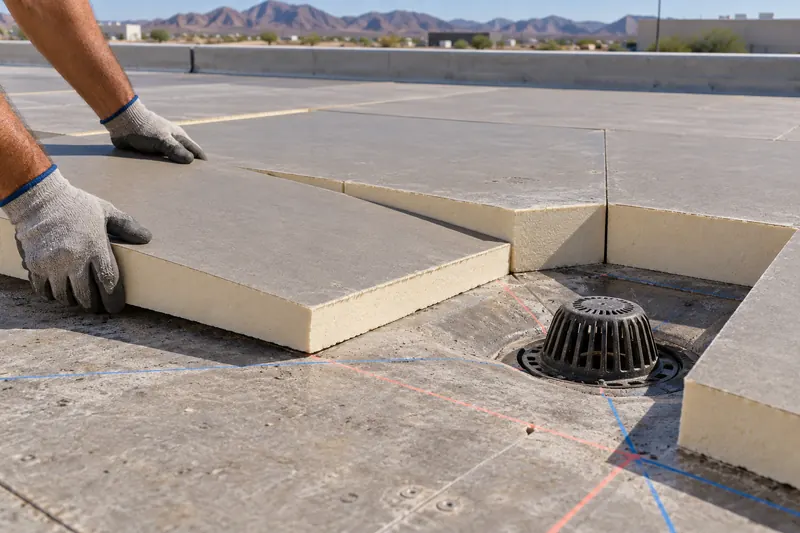
Wet insulation comes out and new boards go down, with tapered pieces that pitch water toward drains. Deck damage found under the old roof gets fixed before anything is covered.
4
Step 4: Install And Flash
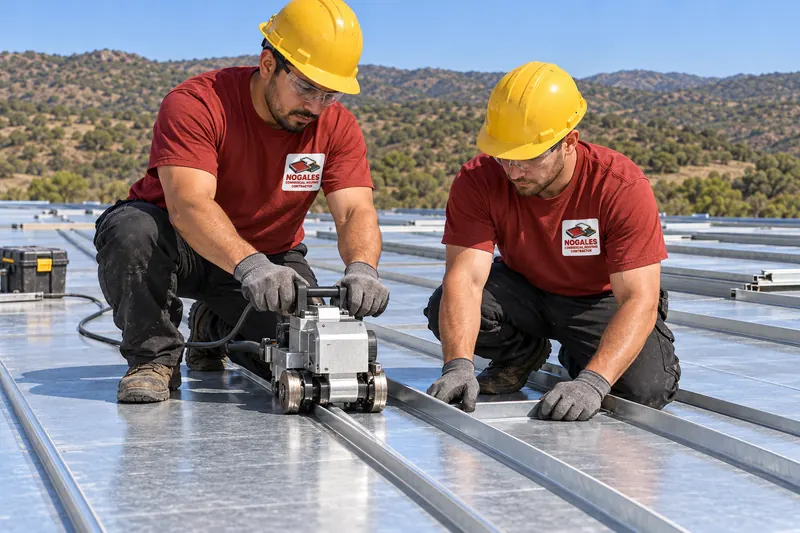
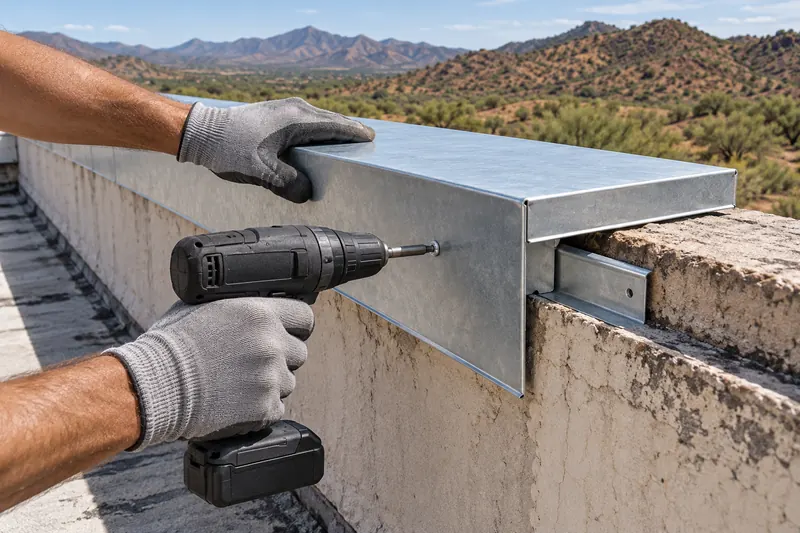
Membrane or panels go on section by section, then curbs, parapets, coping, and edge metal get flashed. Each opened area is closed up before afternoon storms build.
5
Step 5: Test And Walk The Roof
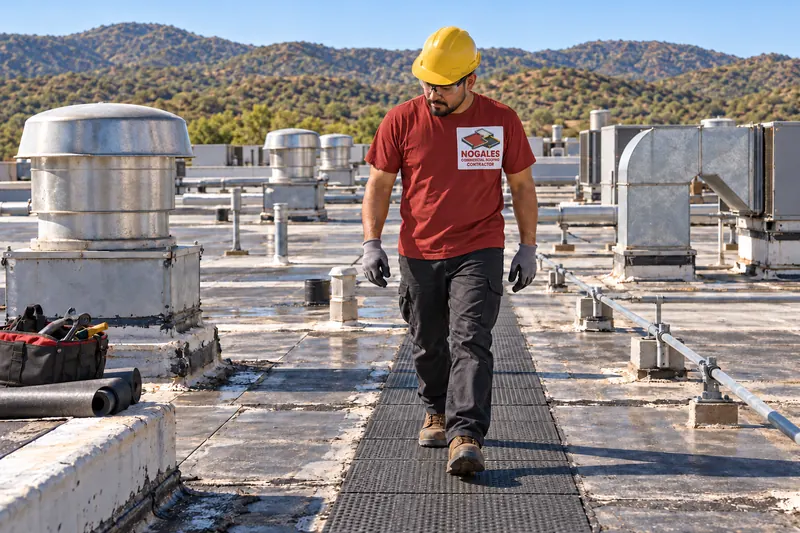
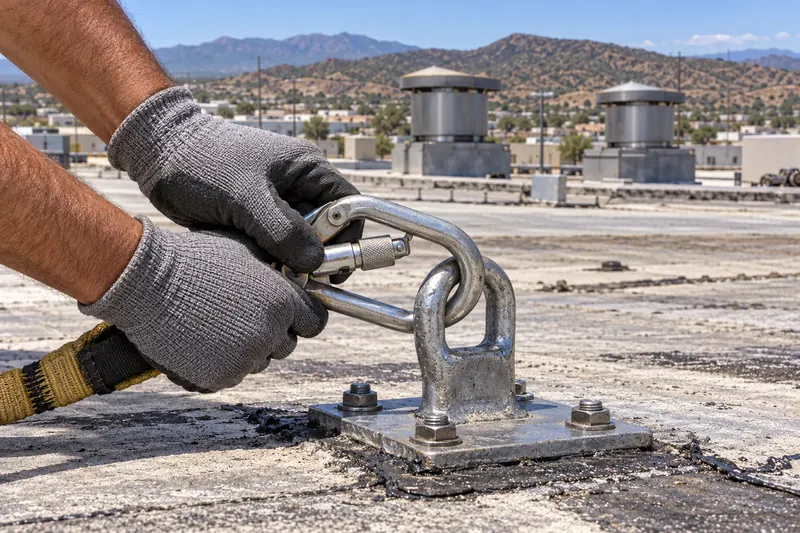
Tied off at the roof anchors, we probe seams, clear drains and scuppers, and walk the roof with you or your facility manager. Loose ends get fixed before the job is called done.
A roof built for this climate works through both the storm season and the freezing months. These are the changes owners notice first.
Water reaches the drains instead of sitting in low spots after monsoon storms.
Welded or taped laps hold when summer rain is driven sideways by wind.
Flashings and laps ride out about 97 nights a year at or below freezing.
A white membrane reflects much of the summer sun above coolers and offices.
Docks, entrances, and cold rooms keep running while sections are roofed.
Water Coming In After A Monsoon Storm?
Call and tell us where the stain or drip shows up inside and which part of the roof sits above it. That points the first visit to the right seam, drain, or curb.
Most leaks on commercial roofs here start at one of these six spots. Each one has a repair, and some point toward a new roof.
Wind-Lifted Membrane Edges
Downburst winds catch a loose membrane edge and peel it back. Once air gets under the sheet, the lift grows with every storm until the edge is refastened.
Clogged Drains And Scuppers
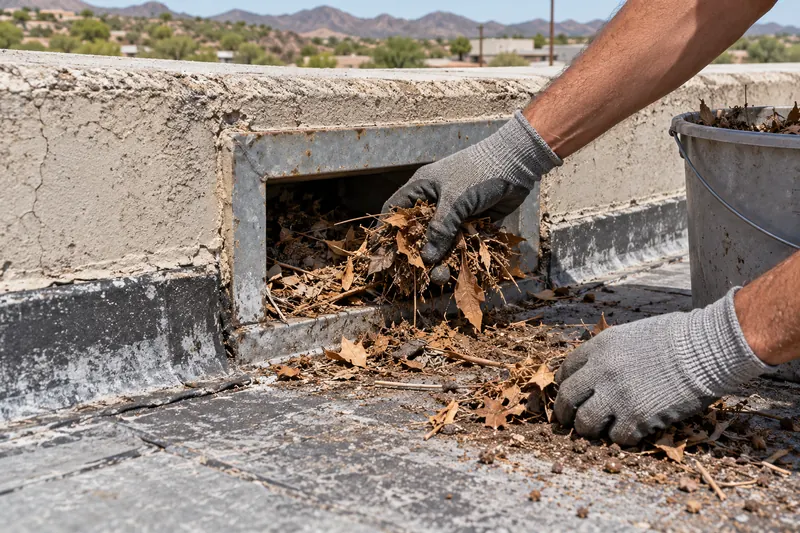
Leaves and blowing dust pack overflow scuppers, so rain stacks up on the roof. Ponding water then finds any open lap nearby.
Open Laps At Equipment Curbs
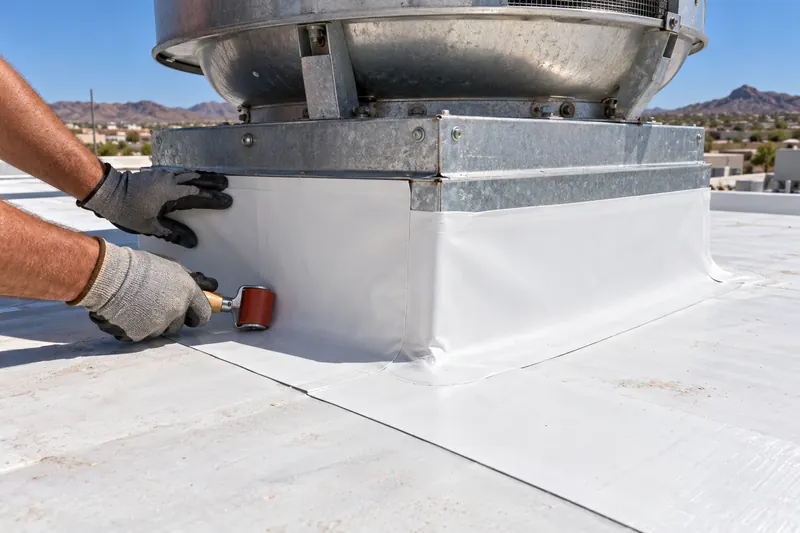
Condenser and exhaust-fan curbs move and vibrate. Flashing around their base cracks first, and service traffic around the units wears the membrane thin.
Backed-Out Metal Fasteners
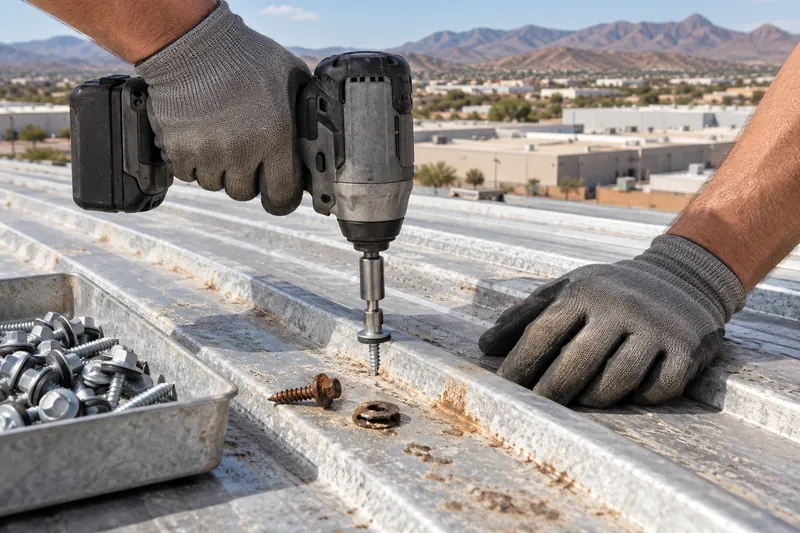
Hot afternoons and freezing nights work exposed screws loose on metal panels. Worn washers let water run down the shank into the building.
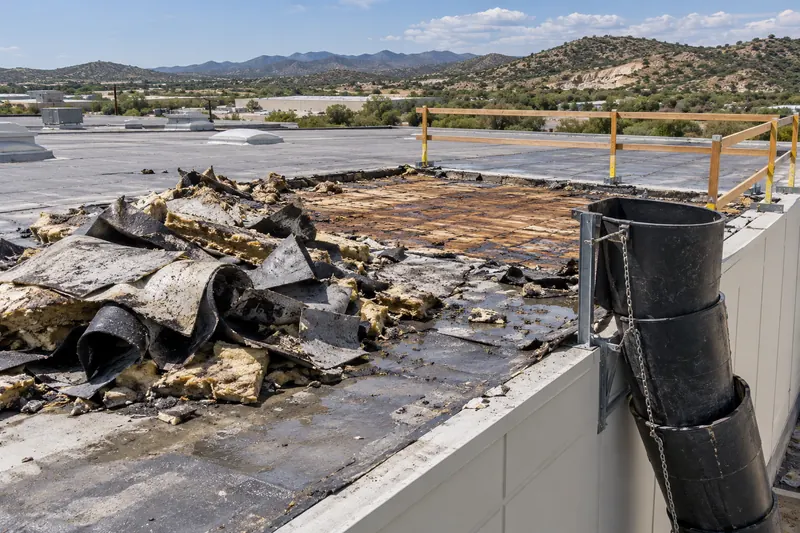
Wet Insulation Under The Roof
Soft spots underfoot point to soaked boards below the membrane. Core cuts show how far the water spread and which areas need tear-off.
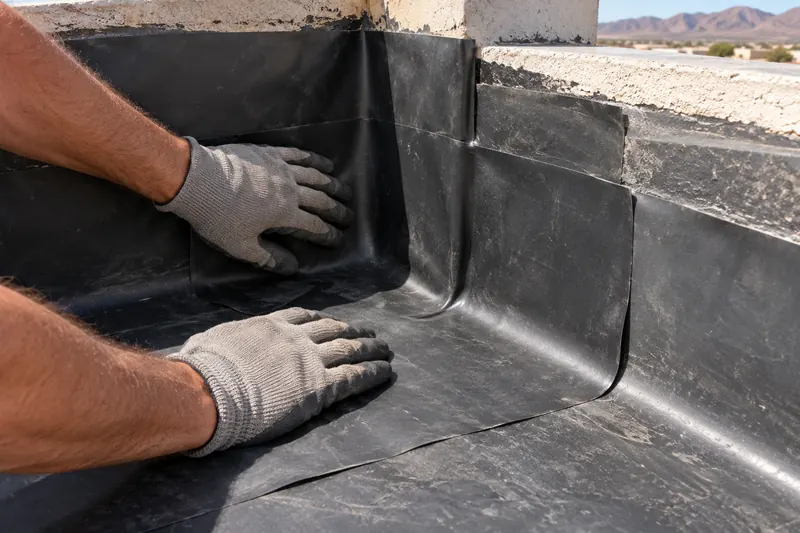
Split Corners At Parapet Walls
Inside corners where the membrane turns up a parapet carry the most stress. A split there sends water straight down the wall into offices.
Repair, Recover, Or Replace Your Roof
The answer comes from what the inspection finds under the membrane, so treat these signs as a starting point.
Signs A Repair Will Do
Leaks trace back to one curb, seam, or drain
Core samples from the field come back dry
The membrane still bends without cracking
Damage followed a single storm
Older patches are still holding
Signs It Is Time For A New Roof
Stains show up in several unrelated rooms
Wet insulation runs across large areas
The membrane is brittle, shrunken, or crazed
New leaks appear faster than patches go on
The deck already carries the most layers code allows
Commercial Roofing Across Santa Cruz County
Nogales sits on the border, so the area we cover opens north along I-19 and northeast on SR 82.
Main street commercial buildings in an incorporated town where the Town Clerk is the first stop for paperwork.
Nogales Commercial Roofing Contractor Questions
How does the Nogales climate wear down a commercial roof?
Season swings do most of the damage. Arizona State Climate Office normals for Nogales show about 97 nights a year at or below freezing and about 105 days at 90°F or hotter.
Most of the 16 inches of yearly rain arrives July through September. Membranes, sealants, and fasteners expand and shrink through all of it, so seams and flashings wear faster than open field areas.
What does a commercial roof inspection include?
Expect a full walk of the roof plus moisture readings. We check the membrane or panels, every seam and flashing, drains and scuppers, rooftop curbs, and edge metal, then look at interior stains below. Core samples come out where readings point to wet insulation. You get photos and a plain list of what needs repair now and what can wait.
Can you replace part of a roof instead of all of it?
Often, yes, when the wet or failed area is contained. A section can be torn off and rebuilt while the rest stays in service, as long as the new and old roofs tie in cleanly at the joint. When core samples show water spread across most of the roof, a full replacement usually costs less over time than repeated sections.
Do you work on roofs with rooftop refrigeration units?
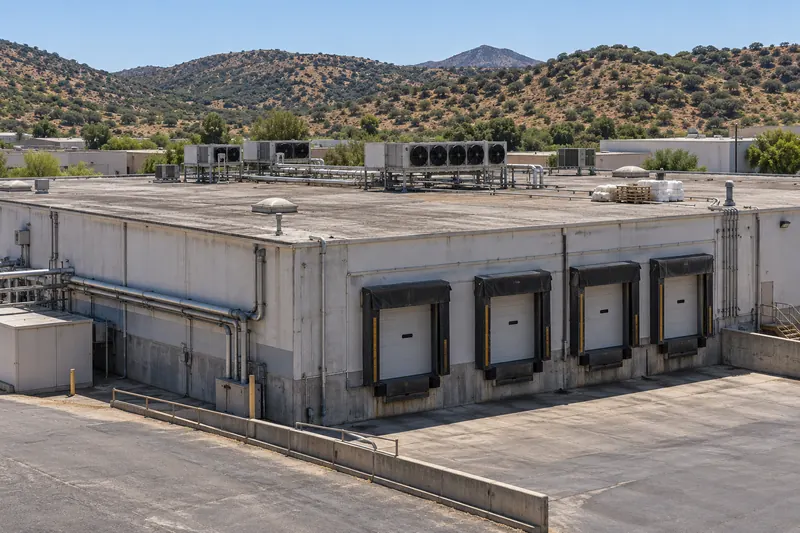
Yes. Cold storage and produce buildings around Nogales carry condensers, exhaust fans, and piping on the roof. We flash each curb, add walkway pads on the paths service techs use, and coordinate with your refrigeration contractor when a unit has to be lifted or disconnected so the membrane can run under it.
What drives the cost of a commercial roof in Nogales?
Five things set most of the price: roof size, how much wet insulation has to come out, the system you choose, how many curbs and penetrations need flashing, and access for lifts and dumpsters. A building with tight street frontage or busy docks takes more planning. The inspection sets the actual scope and price.
How soon should a roof be checked after a monsoon storm?
Check it within a few days of any storm with heavy rain, hail, or strong downburst winds. Look for lifted edge metal, debris in drains and scuppers, and new ceiling stains. Calling early keeps a small opening at a lap or curb from soaking the insulation around it.
Get A Free Estimate For Your Nogales Roof
Tell us about the building and the roof. We start with an inspection and a straight answer on repair, recover, or replacement.