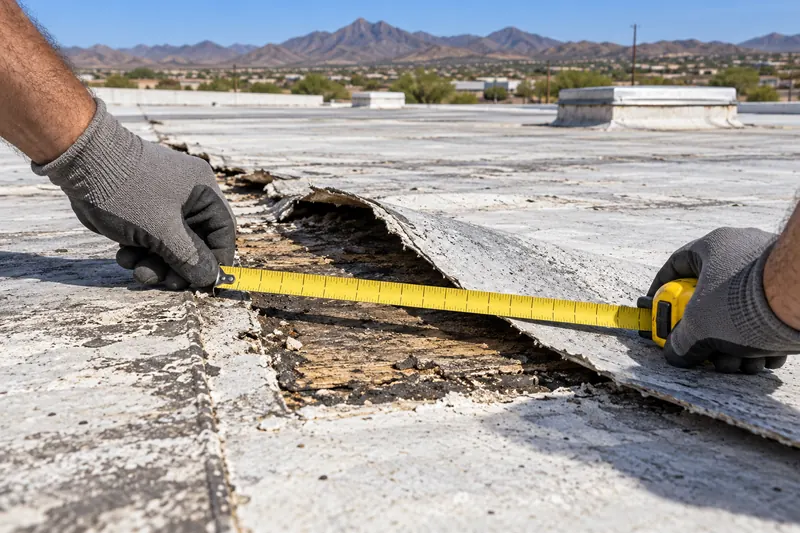
Lifted Perimeter Edges
Strong downburst winds pull at the outer rows of fasteners. A loose sheet at the edge balloons, then tears at the plates if it is left alone.

As a TPO roofing contractor in Nogales, we install and replace white TPO roofs on produce warehouses, cold storage, retail, and offices, with welded seams and insulation built to drain.
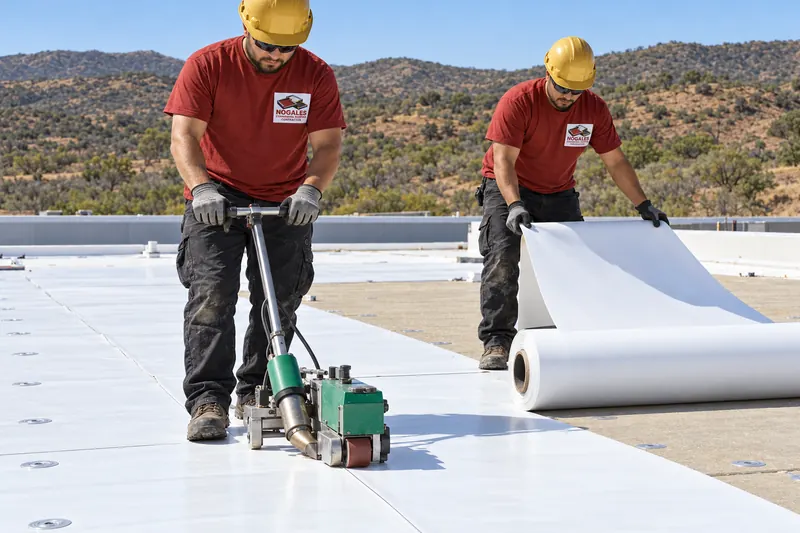
TPO works best on wide, low-slope roofs over cooled space. A few roof conditions point to another system.
These four problems bring most TPO roofs in the area to a repair call or a replacement.
Strong downburst winds pull at the outer rows of fasteners. A loose sheet at the edge balloons, then tears at the plates if it is left alone.
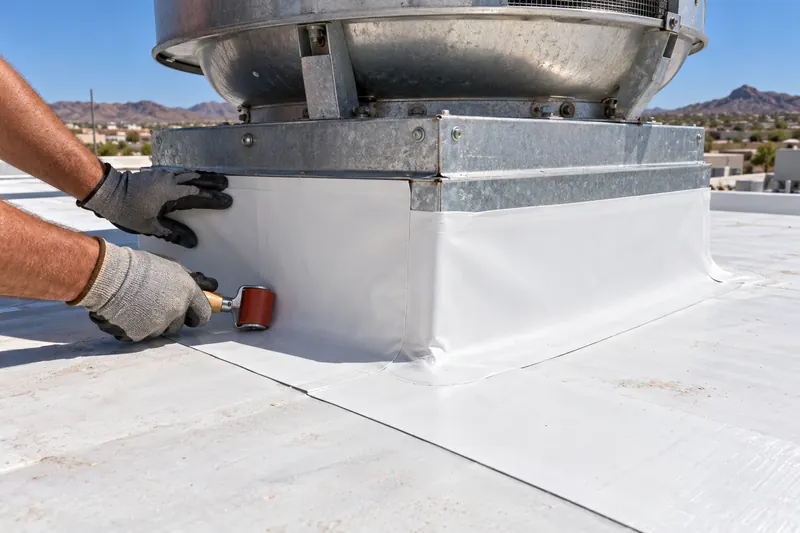
Exhaust fans and condensers shake their curbs every time they cycle. Welded corners at the curb base split before the field membrane shows any wear.
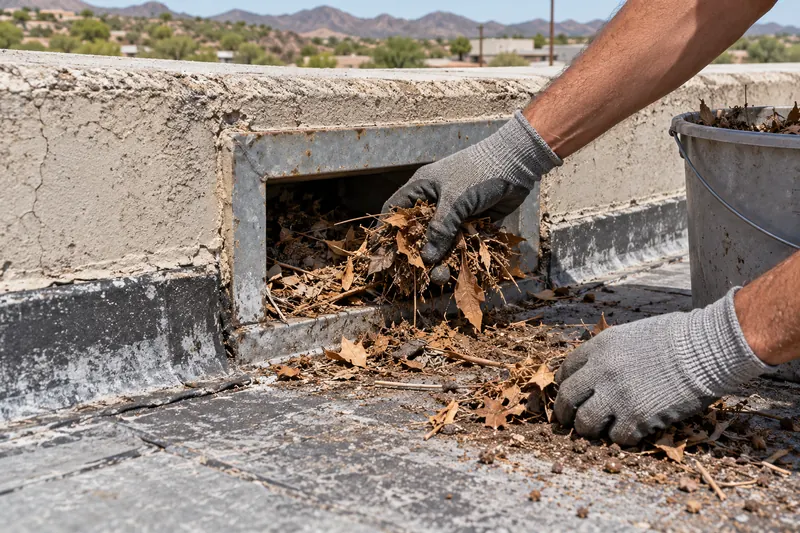
Dust and leaves collect at outlets on a white roof like any other. Standing water around a blocked drain stresses nearby seams and leaves dirt rings.
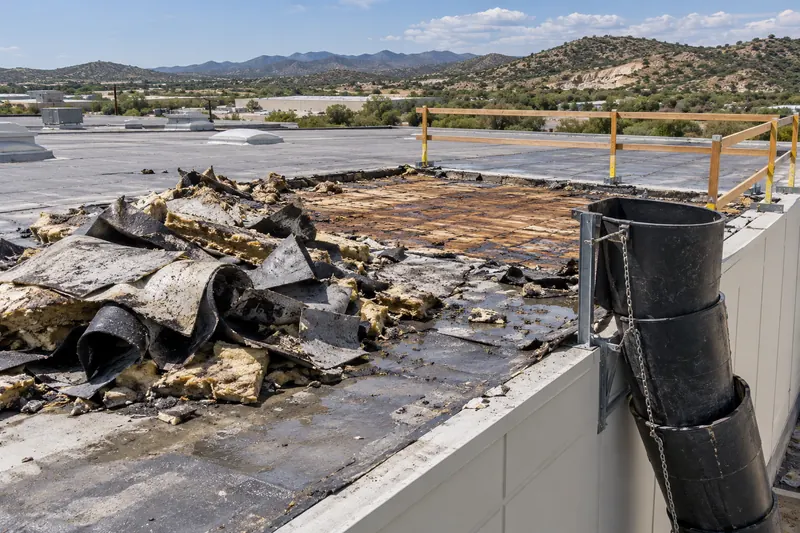
Wet insulation under TPO stays hidden until the deck feels soft. Moisture readings and cores find it before a full section has to come out.
Four decisions shape every TPO roof we install, and the inspection settles each one.
| Choice | What It Means | When We Use It |
|---|---|---|
| Membrane thickness | Thicker sheets add surface life and stand up to foot traffic | Roofs with condensers and regular service visits |
| Attachment | Mechanically fastened, fully adhered, or a mix at the perimeter | Set by deck type, wind exposure, and roof height |
| Recover or tear-off | Recover goes over a dry existing roof; tear-off starts at the deck | Decided by core samples and the layers already in place |
| Insulation | Tapered boards build slope; thickness sets the cooling load | Every TPO roof over coolers or air-conditioned space |
The gains show up in specific parts of the roof and in the building below it.
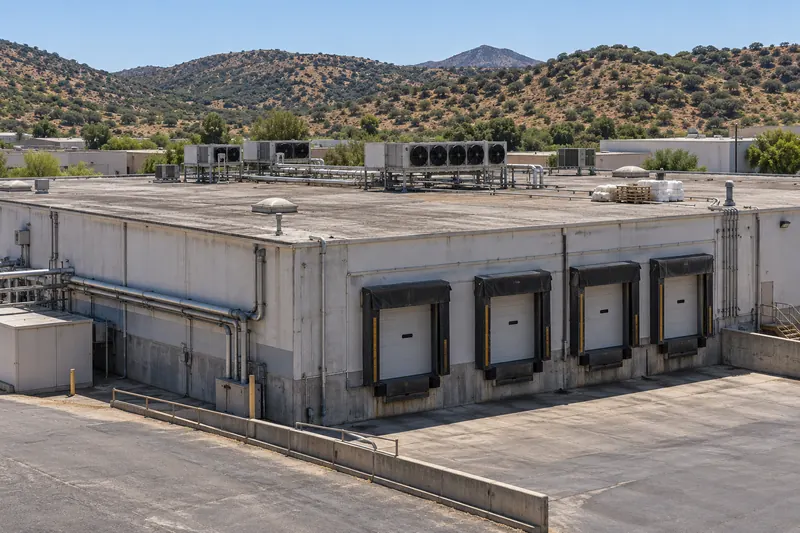
Call with the size of the roof, the units on it, and where water shows up inside. We start at the curb flashing and the welded laps around it.
+1 (623) 310-0169From the first moisture reading to the final seam probe, a TPO job follows the same five steps on every building.
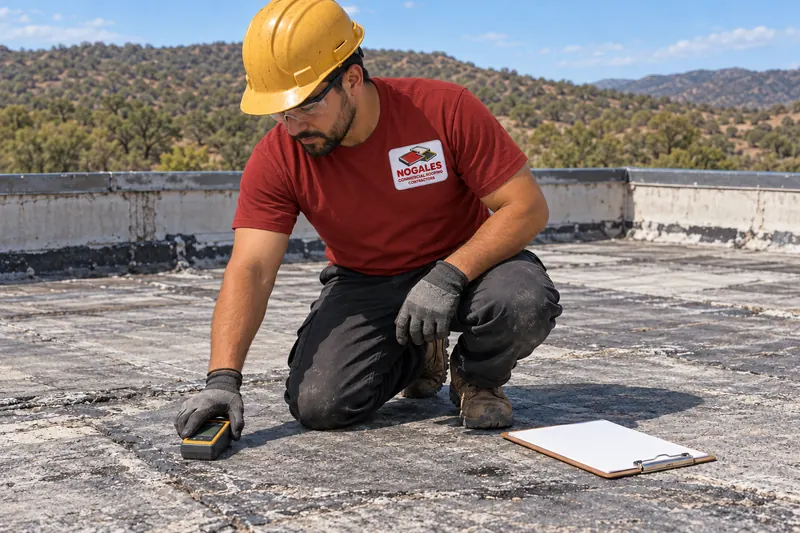
Readings across the existing roof show where water sits in the insulation. We mark wet areas, measure drains, and photograph each curb and edge detail before planning.
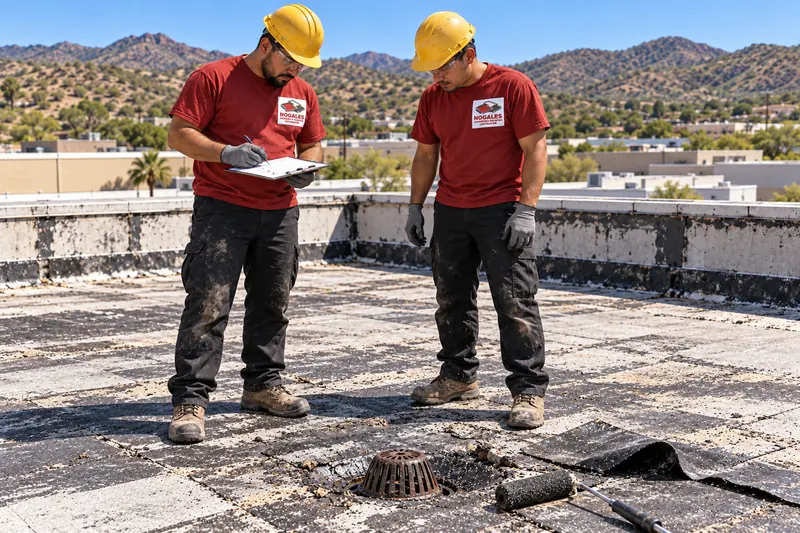
Soaked insulation and failed membrane come off down to the deck, one section at a time. Open areas are sized so they close before afternoon storm cells arrive.
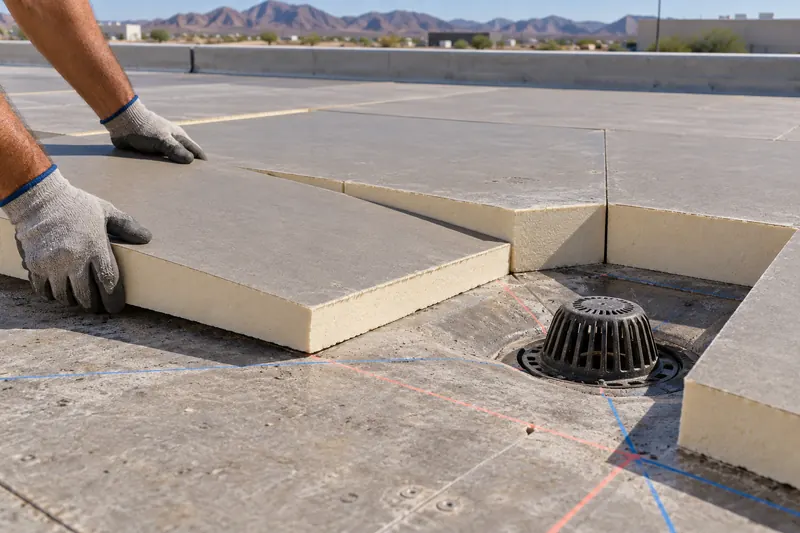
Tapered insulation and cover board go down toward each drain. Fastener patterns tighten at corners and the perimeter, where wind uplift is strongest.
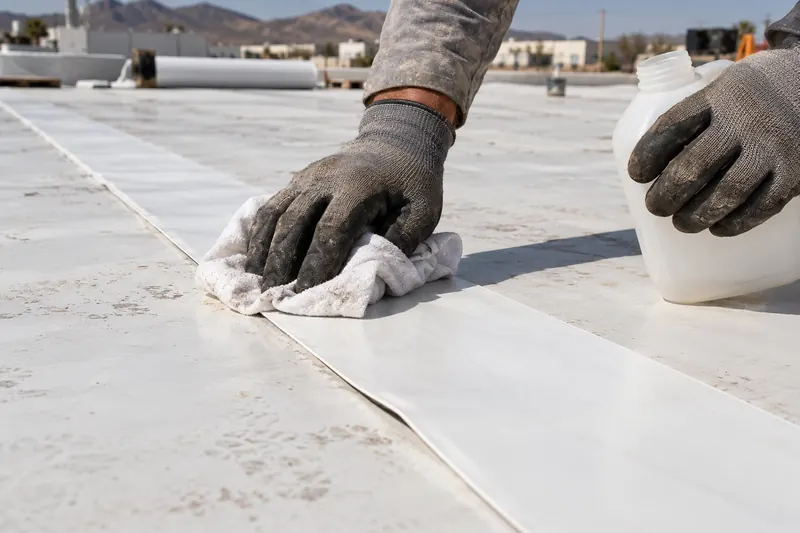
Laps are cleaned, then joined with a robotic hot-air welder. On cold mornings we run test welds and adjust heat and speed before the first production seam.
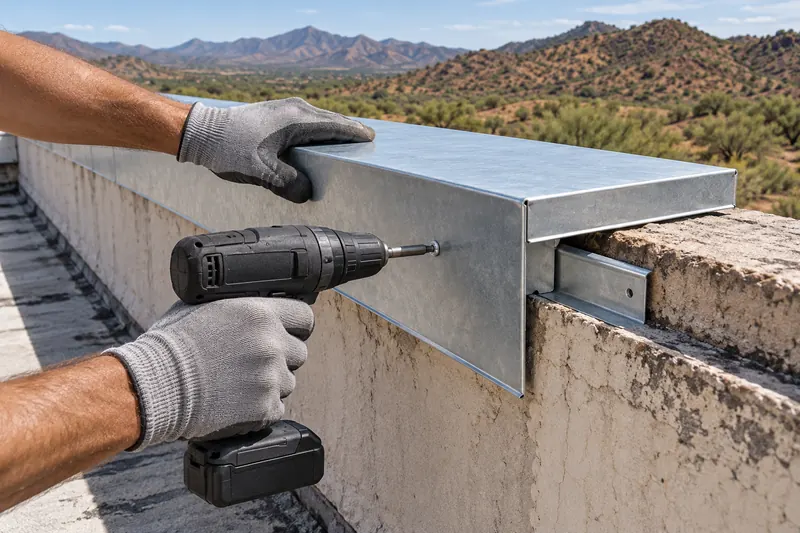
Coping, edge metal, and curbs get flashed and welded in. Every seam is probed with a hand tool, and any gap is rewelded before the section is signed off.
Two other systems cover the roofs where TPO falls short.
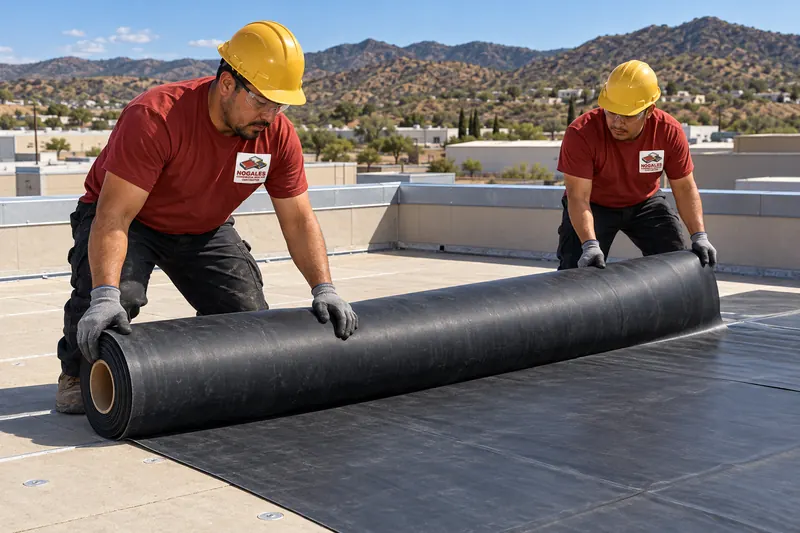
Better on cramped roofs crowded with pipes and vents, and on shops where a black sheet adds little cooling load.
EPDM roofing in Nogales
Large distribution and plant roofs where TPO goes on in phases around docks, stacks, and heavy curbs.
Industrial roofing in NogalesIn most cases it is. A white TPO sheet reflects much of the summer sun over coolers that run from spring through fall, and its welded seams cover big flat areas in long runs. On cold storage we also plan insulation thickness, condenser walkways, and a vapor layer where cold interior air meets a warm deck.
Thicker sheets give more surface life and stand up better to foot traffic. Roofs with condensers and frequent service visits get the heavier membrane, and quiet roofs over storage can use a standard sheet. We set the thickness after counting the units and service paths on your roof.
Sometimes. A recover works when core samples show dry insulation and the deck carries fewer layers than code allows. Wet areas still come out first. If the old roof is soaked across large sections, tear-off to the deck is the better path.
Every welded lap gets probed with a hand tool along its full length. Test welds at the start of each day, and again when the weather changes, show the welder settings are right. Any soft spot or gap is rewelded and probed again.
Dust from the valley settles on every roof here, so the surface dulls between rains. Rinsing the membrane during maintenance visits brings back much of its reflectivity. Keeping drains clear matters more for the roof than the color does.
Price follows roof size, insulation work, membrane thickness, and the number of curbs and penetrations to flash. TPO and EPDM often land close on a plain roof; detailed roofs and cold storage insulation move the number more than the membrane does. Your inspection sets the scope.
Expect roughly 20 to 30 years from a well-installed TPO roof here. Clear drains, sealed curbs, and a check after big storms push it toward the long end, while ponding water and unrepaired edge damage pull it toward the short end.
Tell us the roof size, the units on it, and what is happening inside. We take it from the first inspection to the final weld.
Leave your name and number and we will call you back about the building.
Or call now: +1 (623) 310-0169