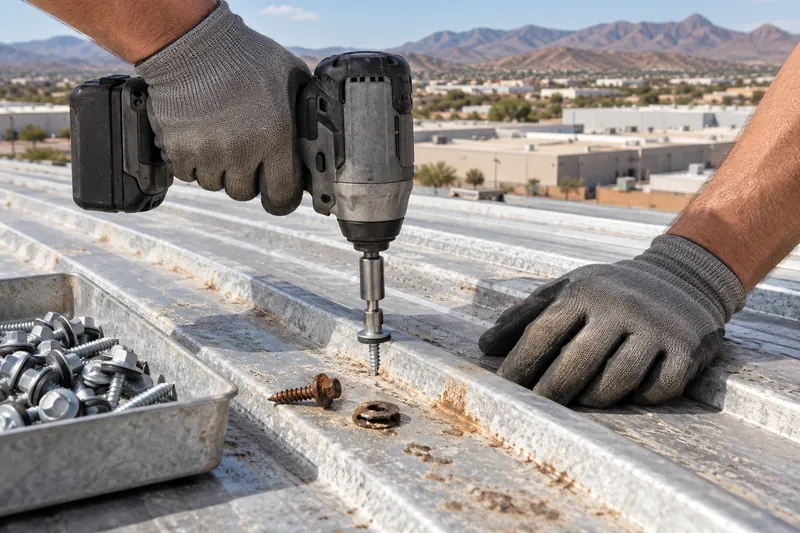
Loose Fasteners On Metal Roofs
Pitched metal roofs on town buildings lose screw grip over many hot and cold cycles. Rusty halos around screw heads mark the leaks.
As a Patagonia, AZ commercial roofing contractor, we repair and replace metal and low-slope roofs on main street businesses and town-area buildings, starting with the Town Clerk.
Patagonia is an incorporated town, and its building permit procedures start at the Town Clerk's office. Before any erection, alteration, renovation, or repair of a structure, the town asks for a flood hazard information sheet to see whether the property sits in a Special Flood Hazard Area.
Properties inside that area need a floodplain use permit, and the Santa Cruz County Building Department decides whether building plans are sufficient. Contractors also need a current Patagonia business license and an Arizona TPT number before a permit is issued.
Older storefronts and town-area buildings here show these four problems most often.
Pitched metal roofs on town buildings lose screw grip over many hot and cold cycles. Rusty halos around screw heads mark the leaks.
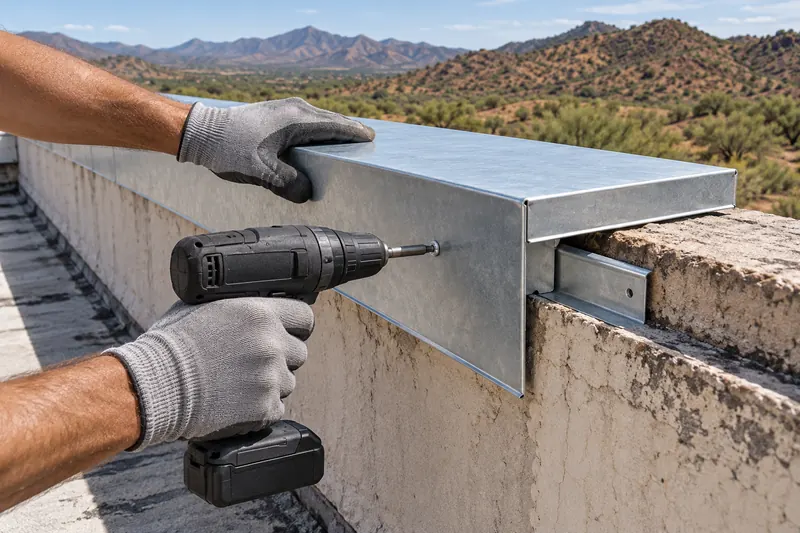
Wind works coping caps loose on street-facing parapets. Once the cap lifts, rain soaks the top of the wall and the flashing behind it.
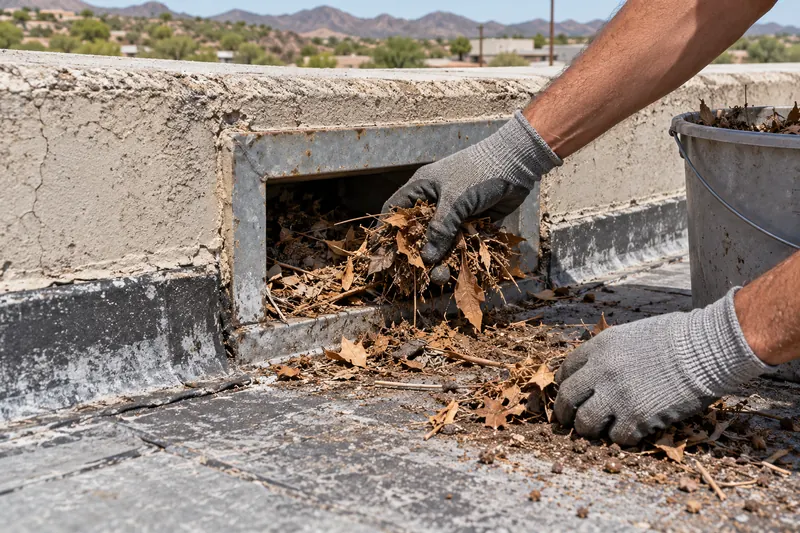
Main street buildings share walls, and scuppers often empty onto a lower roof next door. Clogs back water onto both roofs.
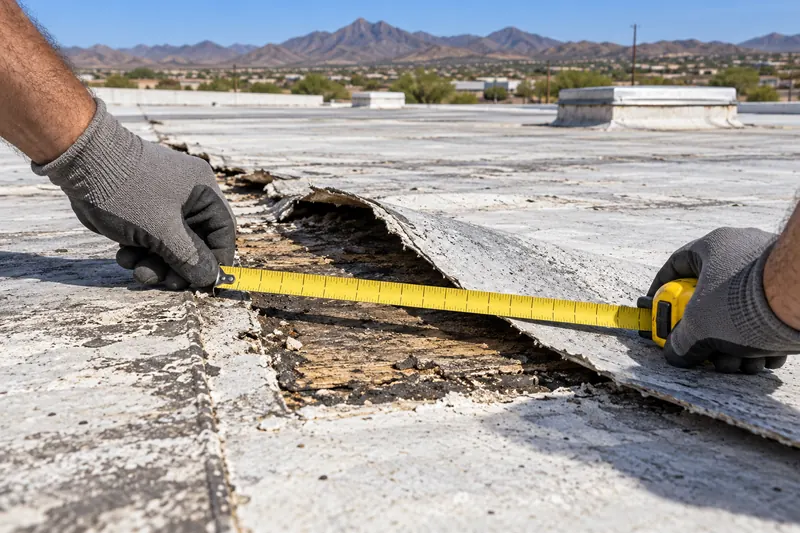
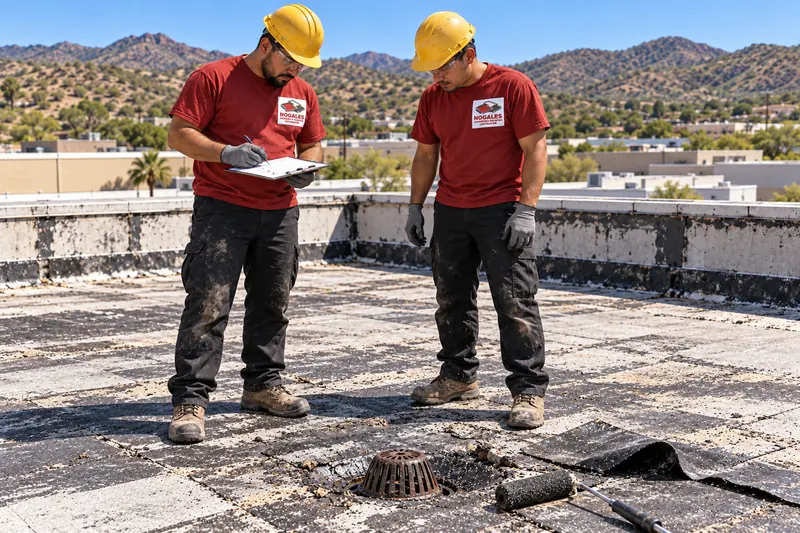
Rear additions behind the storefront usually carry a flat roof. Its membrane dries, lifts at the edges, and leaks into storage rooms.
Fixing the roof right the first time saves a second round of paperwork.
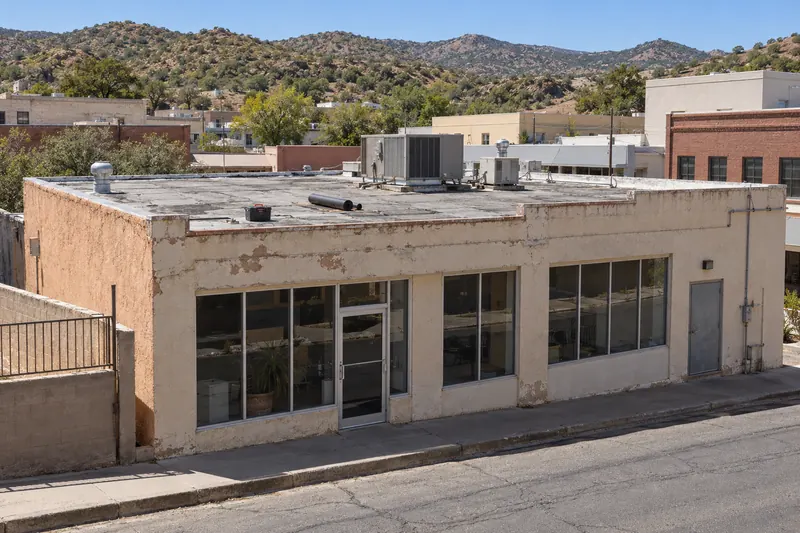
Main street and town-area roofs here split between metal and membrane.
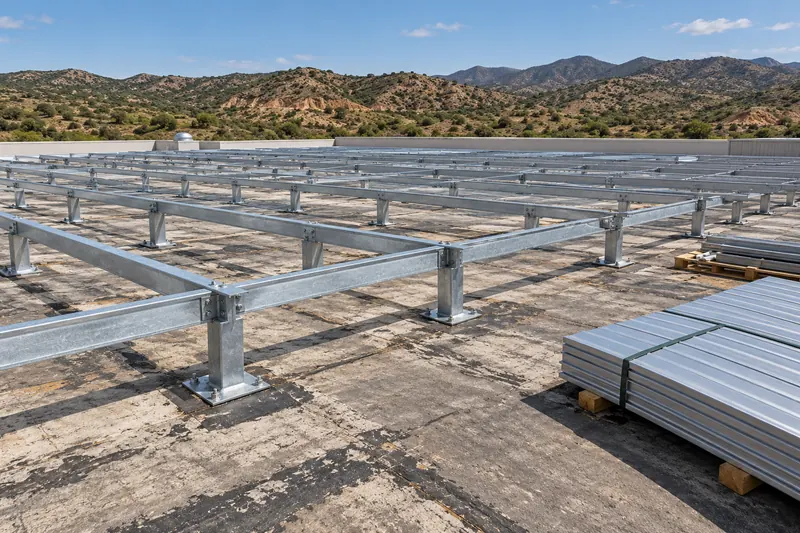
Standing seam or fastened panels for pitched town buildings, plus retrofit framing over rear flat roofs.
Commercial metal roofing in Nogales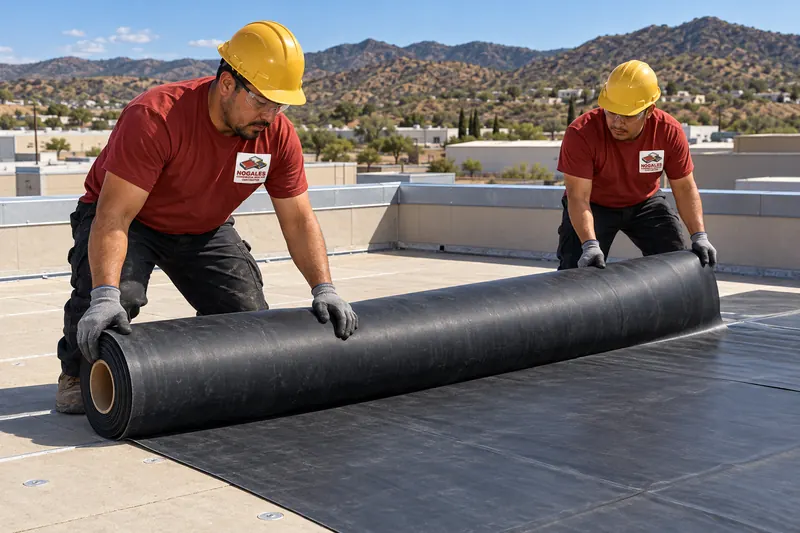
Rubber membrane for rear additions and flat sections behind storefront parapets.
EPDM roofing in Nogales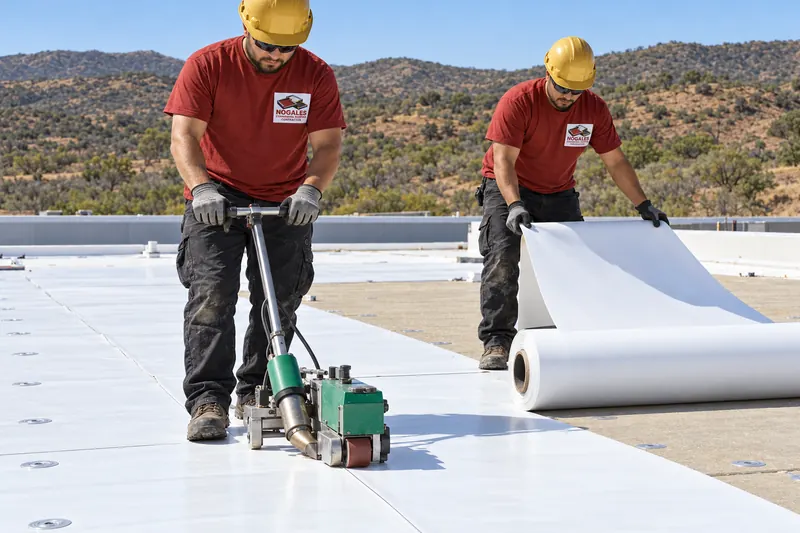
White welded membrane for flat-roofed shops and offices with cooled rooms below.
TPO roofing in NogalesCall and tell us which wall and how much of the cap has lifted. We secure the edge first, then plan the full repair and the town paperwork together.
+1 (623) 310-0169Paperwork and roof work move in step so neither one waits on the other.
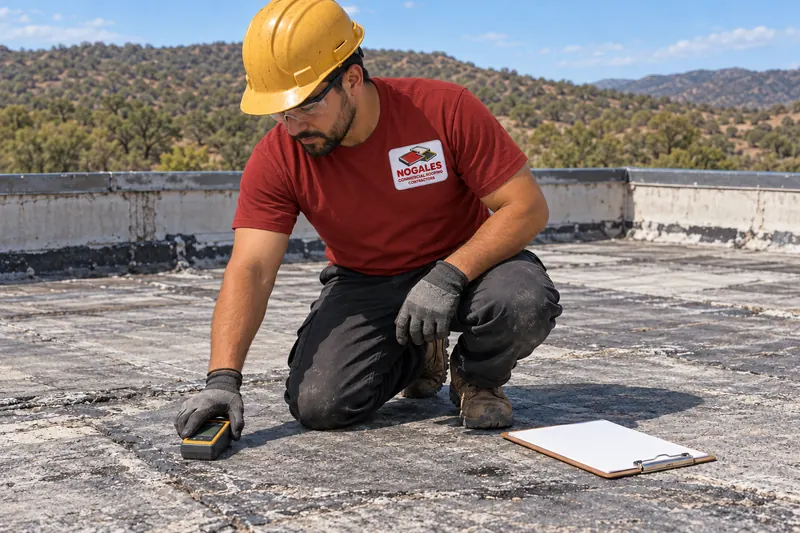
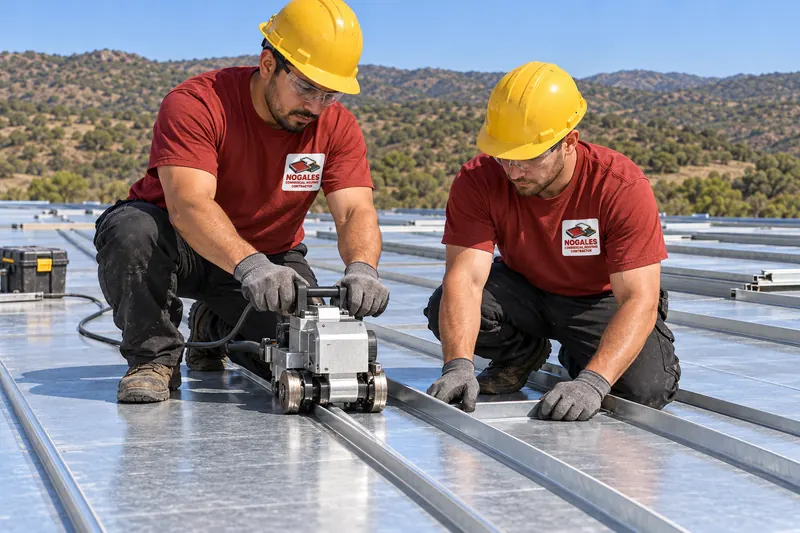
We walk the roof, check fasteners, coping, scuppers, and rear flat sections, and take moisture readings. Photos and measurements go into the town paperwork.
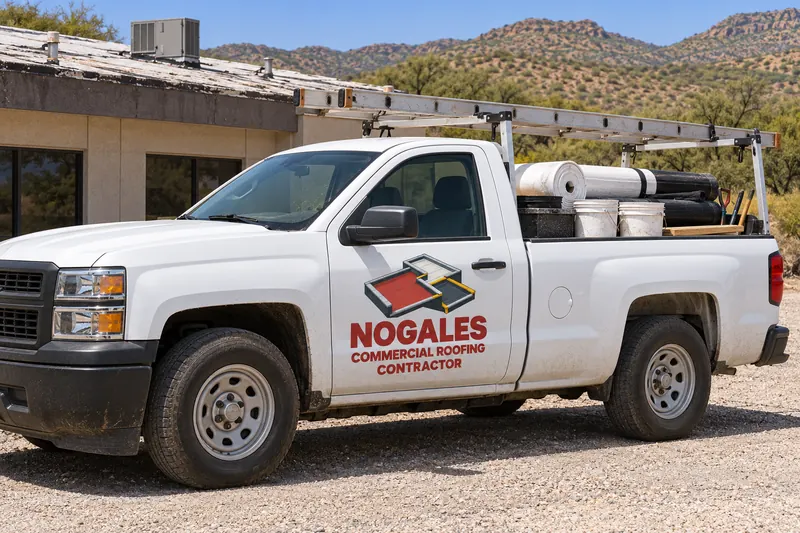
The flood hazard sheet and permit application go to the Town Clerk, and plans go on to the county for review where the work needs them.
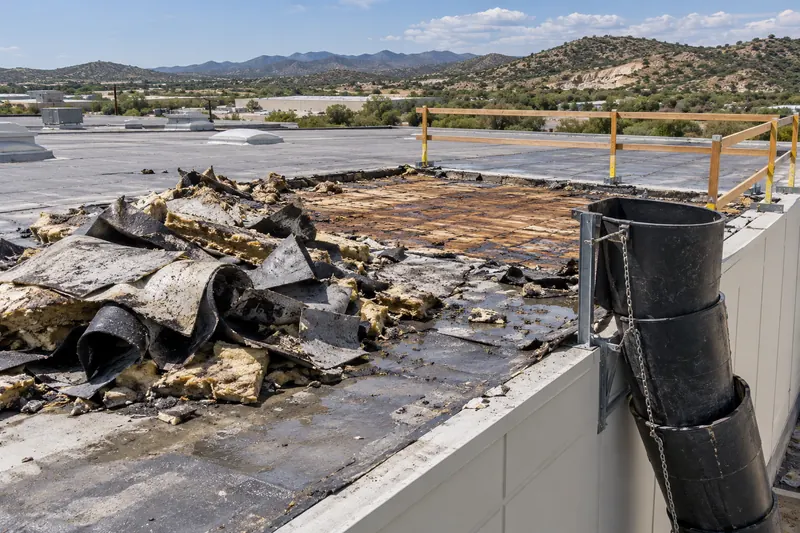
Failed panels, membrane, or wet boards come off in short sections. New insulation and fasteners go in before anything is closed.
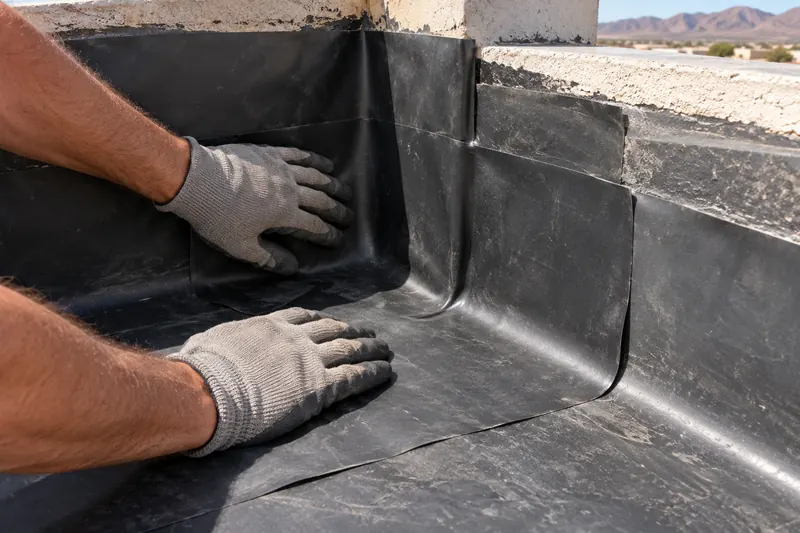
Party walls, parapets, and the joints between a storefront roof and its rear addition get new flashing tied into the main roof.
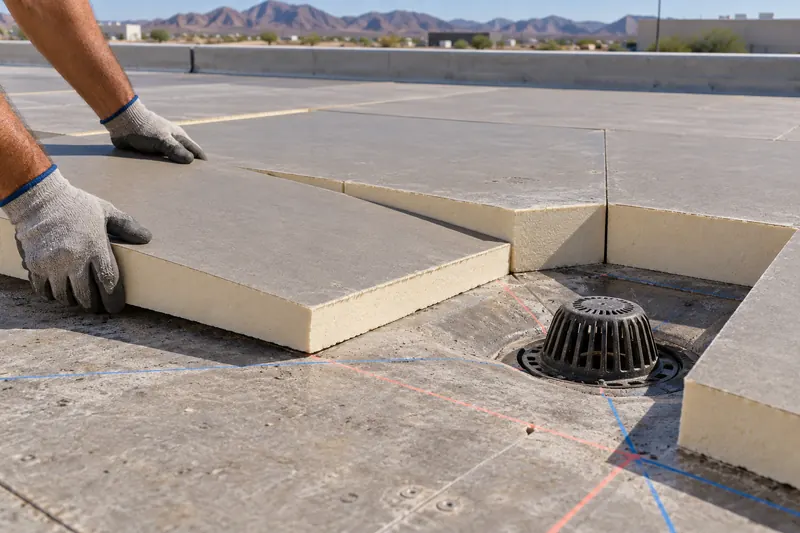
New panels or membrane go on, then coping, trim, and scuppers get sealed. The roof is walked, and any final town inspection is scheduled.
Patagonia sits northeast of Nogales on SR 82; the other towns we cover line I-19.
Cold storage roofs along I-19 north of Nogales.
Historic zone shops north along I-19.
Farm-support buildings near the Santa Cruz River.
Roadside commercial roofs at the north end of I-19.
Twice a year is a solid baseline: late spring before the monsoon and fall before freezing nights return, plus a check after any severe storm. Routine work covers clearing drains and scuppers, checking seams and flashings, resealing pitch pans, tightening metal roof fasteners, and noting ponding.
Start with the Town Clerk. The town asks for a flood hazard information sheet before any repair of a structure, and a building permit is required for structural work. The clerk confirms which forms your roof scope needs.
It is a mapped zone with a higher flood risk. Patagonia uses the flood hazard sheet to check whether a property falls inside one, and work there needs a floodplain use permit from the town. Roof work on a building in that area gets the extra permit step built into the schedule from the start.
The Town Clerk's office takes the application, and the Santa Cruz County Building Department decides whether the plans are sufficient. Structural roof changes, like new framing or heavier rooftop units, are the ones most likely to need drawn plans.
Town procedures call for a current Patagonia business license and an Arizona TPT license number before a permit is issued. Ask any contractor you hire to confirm both, along with an active license through the Arizona Registrar of Contractors.
Pitched sections take metal well. Flat front roofs behind a parapet usually stay membrane, or get retrofit framing where the parapet height leaves room. Either way, the coping and street-side trim get replaced with the roof so the front wall is sealed at the top.
We flash our side of the shared wall to the top, set coping across it, and route scuppers so water leaves without landing on the neighbor's roof. Where the walls tie together, we coordinate with the owner next door.
Materials travel farther, so deliveries are planned for each section ahead of time, and the paperwork goes in early. On the roof, the work runs the same as anywhere else: open a section, rebuild it, flash it, and close it before evening.
Tell us about the building, the roof, and whether it sits on main street. We line up the inspection and the town paperwork together.
Leave your name and number and we will call you back about the building.
Or call now: +1 (623) 310-0169