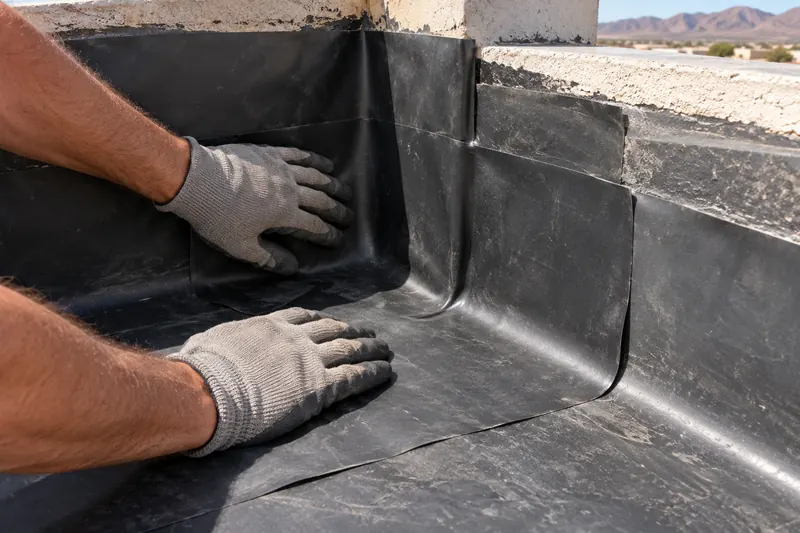
Open Corners Where Roof Meets Wall
Inside corners at stucco parapets carry the most movement. When the flashing opens there, water runs behind the stucco and shows up on gallery walls.

As a Tubac commercial roofing contractor, we repair and replace flat and metal roofs on shops, galleries, and hospitality buildings, including roofs inside the Tubac Historic Zone.
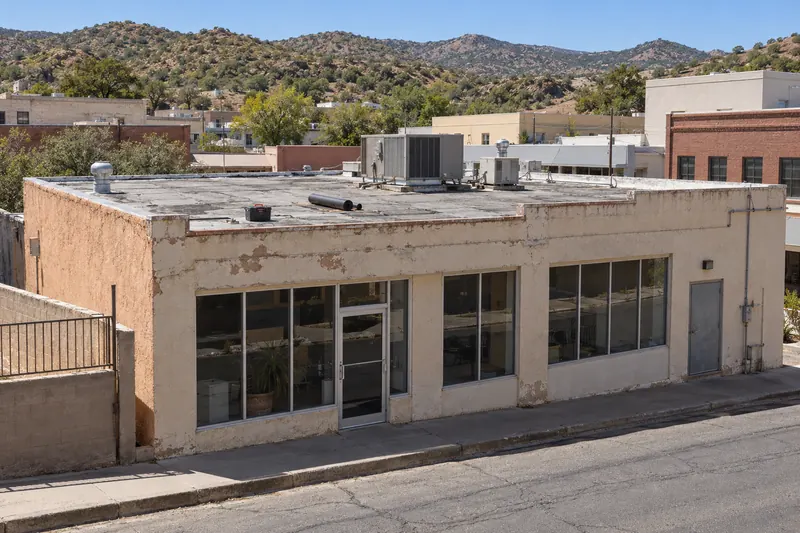
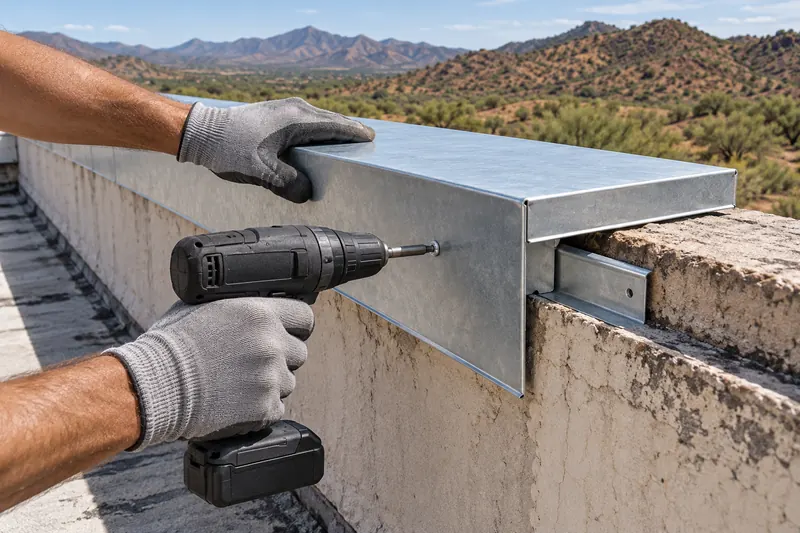
Santa Cruz County's Tubac Historic Zone Advisory Board reviews development and design plans for new buildings and for changes to existing structures inside the zone. A new metal roof, a different color, or taller parapet coping can count as a change people see from the street.
That review comes in addition to the county building permit. We check the board's page and the county's development review form, then plan materials around the answer.
Older low-slope roofs behind stucco parapets show the same four problems again and again.
Inside corners at stucco parapets carry the most movement. When the flashing opens there, water runs behind the stucco and shows up on gallery walls.
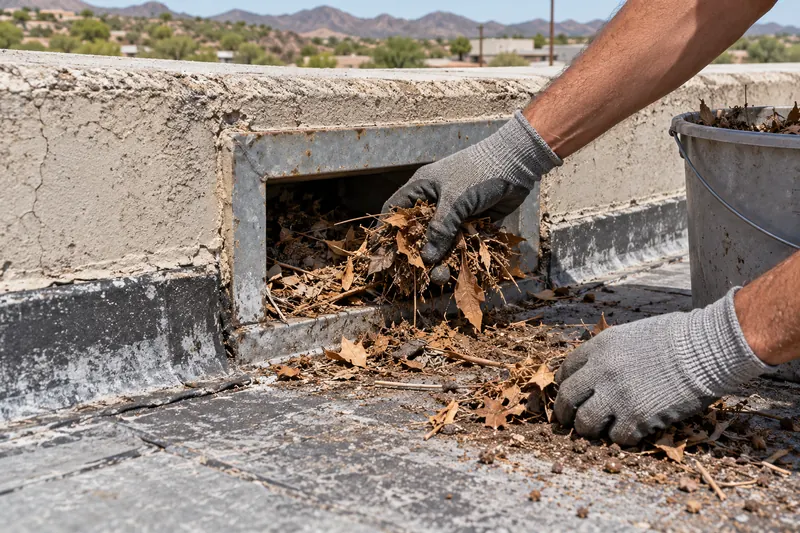
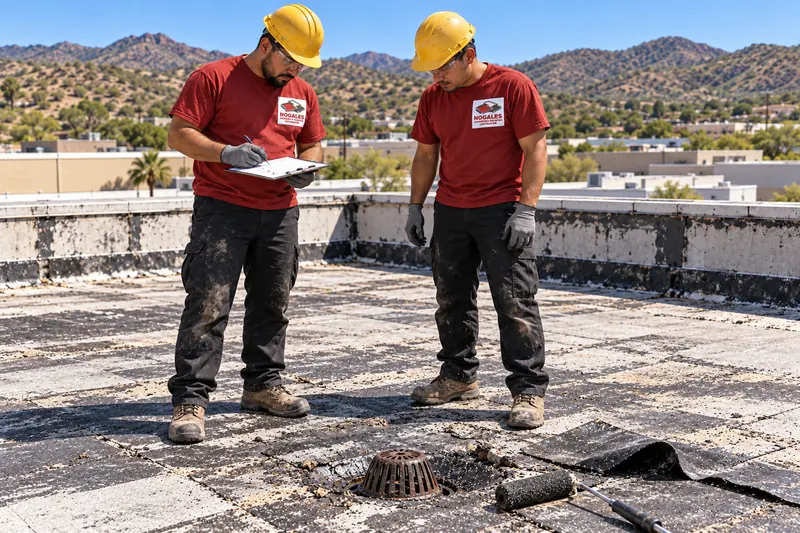
Leaves from nearby trees collect in through-wall scuppers. Rain then backs up on the roof and finds every weak lap along the parapet.
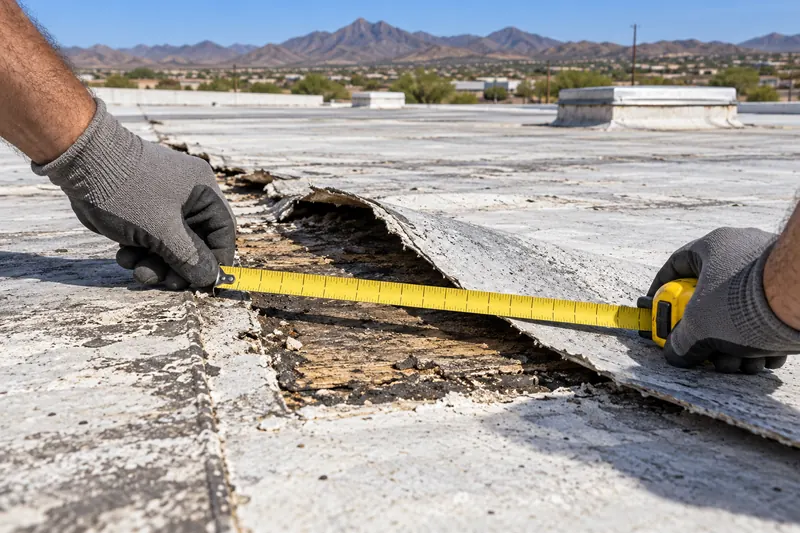
Layers of old patches on small roofs lift at their edges in the wind and trap water underneath them.
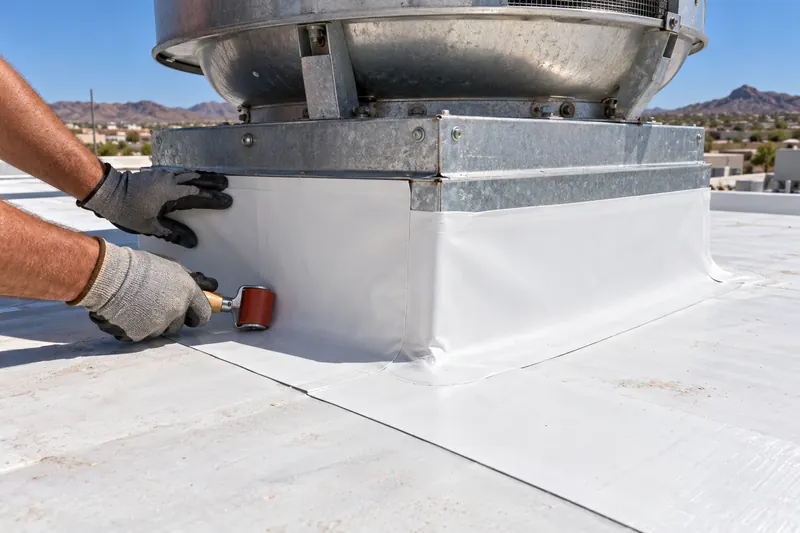
Units and evaporative coolers sit on curbs whose flashing dries out in the sun. A crack at one corner lets water into the ceiling below the unit.
On small historic-zone buildings, a new roof stops the leaks while the building keeps its look.
These two systems fit most Tubac commercial buildings.
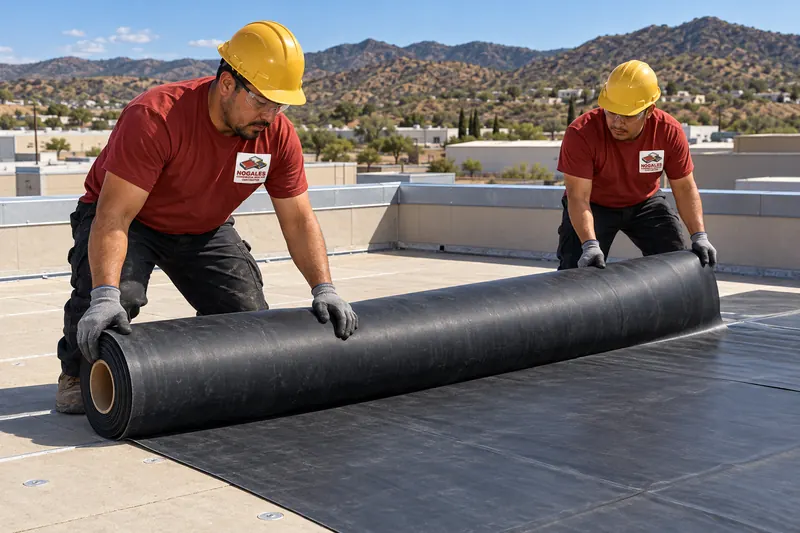
Rubber membrane for small, low-slope roofs behind parapets, with corners and scuppers flashed by hand.
EPDM roofing in Nogales
Standing seam for pitched sections, with color and profile chosen to suit historic zone review where it applies.
Commercial metal roofing in Nogales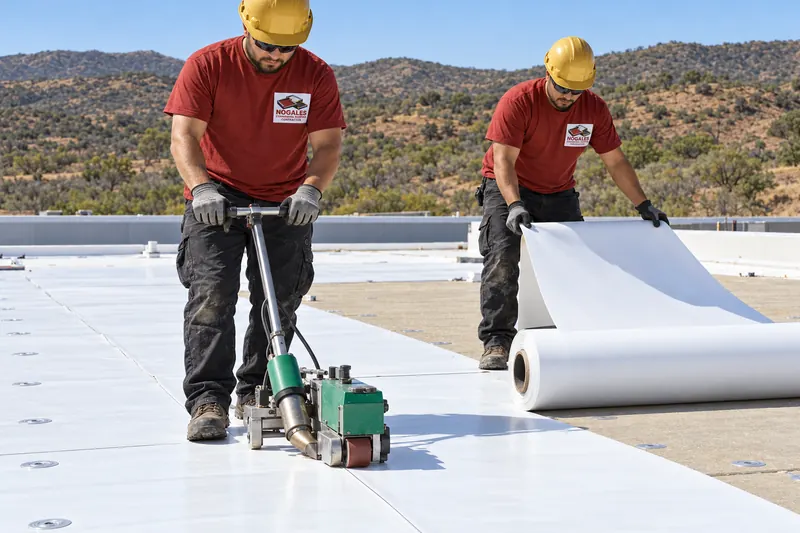
White welded membrane for inns and restaurants with air-conditioned rooms below a flat roof hidden behind the parapet.
TPO roofing in NogalesCall and tell us which wall and which corner of the roof sit above it. Water behind stucco usually starts at a parapet corner or a scupper, and we check those first.
+1 (623) 310-0169Small roofs, tight access, and design review shape the order of the work.
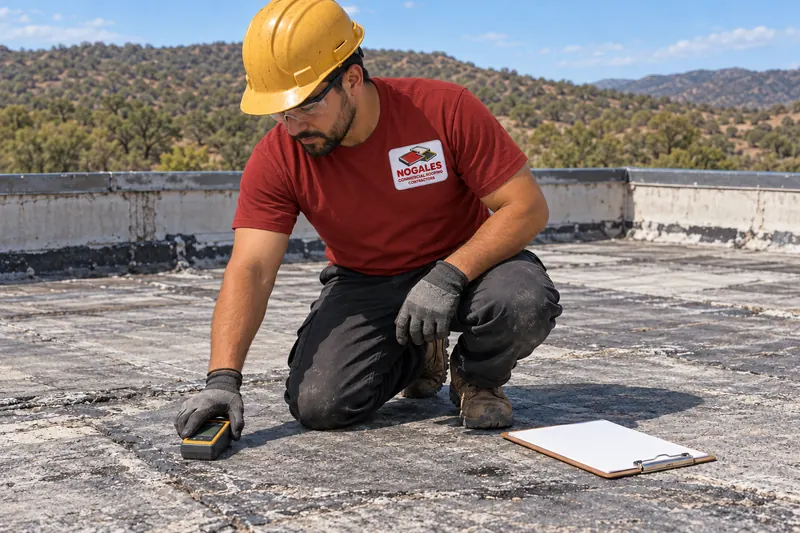
We walk the roof, probe parapet corners and scuppers, and take moisture readings. Photos of the street-facing edges go into the plan for any review.
For a visible change in the historic zone, the board review comes first. Materials are ordered once color and profile are set.
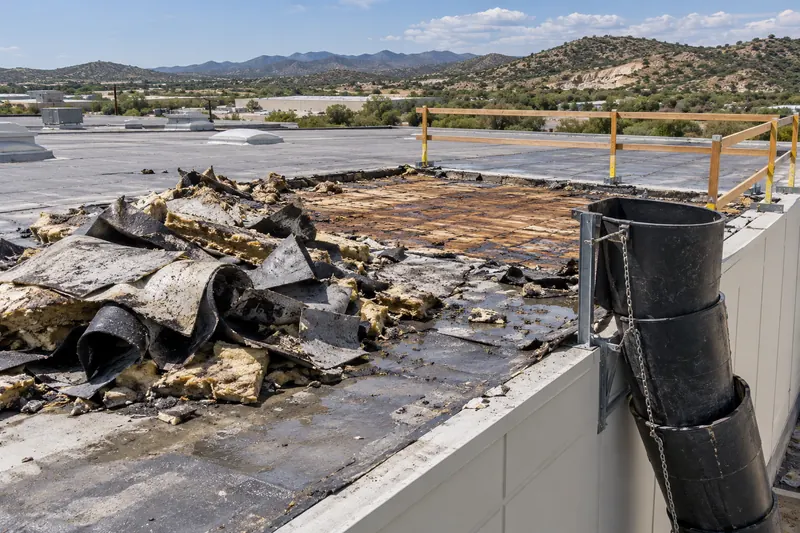
Old patches and wet boards come off to the deck in small sections, so the shop below stays dry overnight.
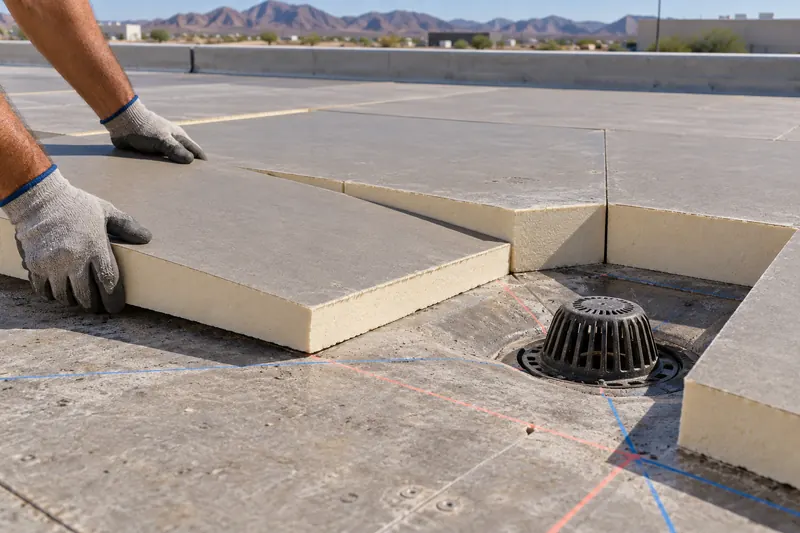
New insulation, membrane, and parapet flashing go on, and scuppers get new linings. Each corner is checked by hand before the roof closes.
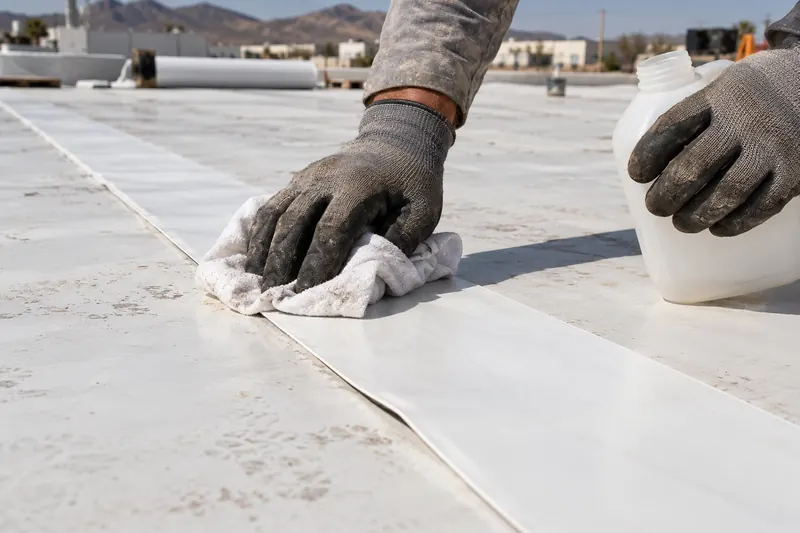
Every lap edge is cleaned and sealed, scupper linings are tested with water, and you walk the roof with us before the last section closes and the street-side coping is checked.
Tubac sits in the middle of the I-19 corridor we cover.
Cold storage and distribution roofs south on I-19.
The next community south, with small farm buildings.
North on I-19 toward the county line.
Main street roofs reached by SR 82 from Nogales.
Yes, in part of the community. Santa Cruz County's Tubac Historic Zone Advisory Board reviews plans for new buildings and for changes to existing structures inside the zone.
A new metal roof or a new color can need that review on top of the building permit. We check the board's page and the county's development review form before planning a roof there.
Repairs that keep the same materials, color, and profile out of sight behind a parapet are the simplest case. Anything visible that changes how the roof looks belongs in front of the advisory board first. We confirm with the county before ordering materials.
Tubac is unincorporated, so building permits come from the Santa Cruz County Building Department, with historic zone review added where it applies. A roof that stays out of sight with the same materials is the simplest case; anything visible from the street adds the board step first.
A fully adhered membrane, usually EPDM or TPO, run up the inside of the parapet and capped with coping. It stays out of sight from the street and handles the corners and scuppers these buildings depend on.
On pitched sections, yes. In the historic zone, panel color and profile are part of the review, so we bring options to the board before ordering. Standing seam with concealed clips keeps screw heads off the visible surface, which suits buildings where the roof shows from the street.
Material comes up by hand or on a small lift placed where walkways and storefronts stay open. Debris goes into covered bins, and each section is closed before we leave for the evening.
Most leaks on these buildings start where the membrane turns up the parapet. Stucco cracks, coping fasteners loosen, and water slips behind the flashing and down the inside face of the wall.
Usually. Noisy tear-off can be scheduled before opening hours, and the interior below active work gets covered where art or inventory sits close to the ceiling.
Tell us whether the building sits in the historic zone and where the leaks show. We plan the review, materials, and work in that order.
Leave your name and number and we will call you back about the building.
Or call now: +1 (623) 310-0169