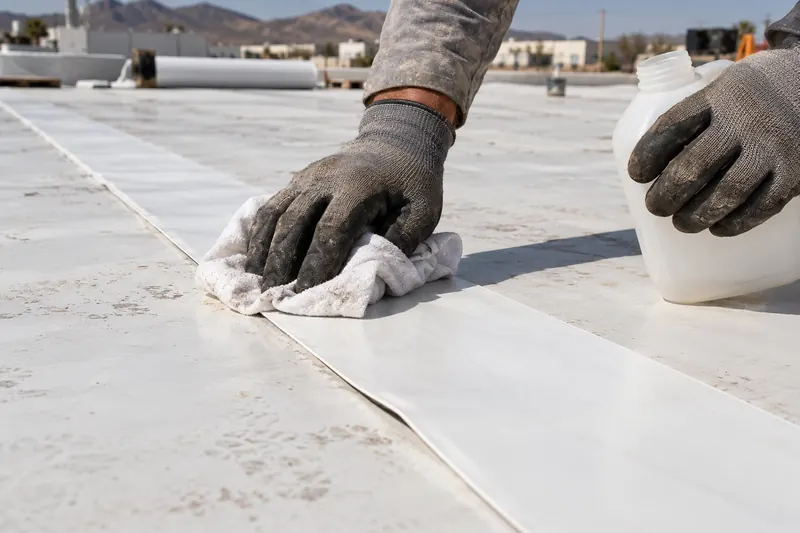
TPO Roofing
Heat-welded white membrane for produce warehouses, cold storage, retail, and offices with cooled space below.
Best For
- Cooled buildings
- Wide low-slope roofs
Look Elsewhere
- Pitched steel buildings
Our commercial roofing services in Nogales cover four roof systems. Each fits a different slope, interior use, and amount of rooftop equipment.
Each card lists the building it fits best and where another system serves you better.
Heat-welded white membrane for produce warehouses, cold storage, retail, and offices with cooled space below.
Best For
Look Elsewhere
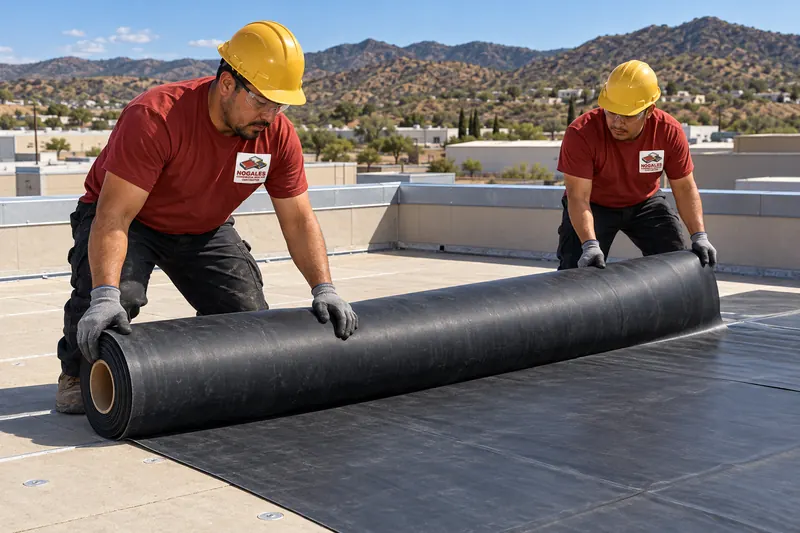
Taped rubber membrane for shops, storage, and roofs crowded with vents and pipes.
Best For
Look Elsewhere
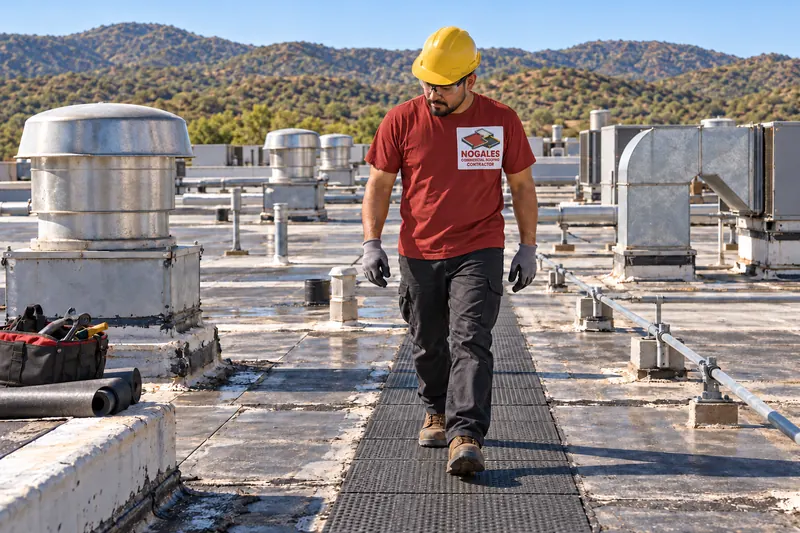
Phased work on distribution centers and plants with heavy curbs, stacks, and skylights.
Best For
Look Elsewhere
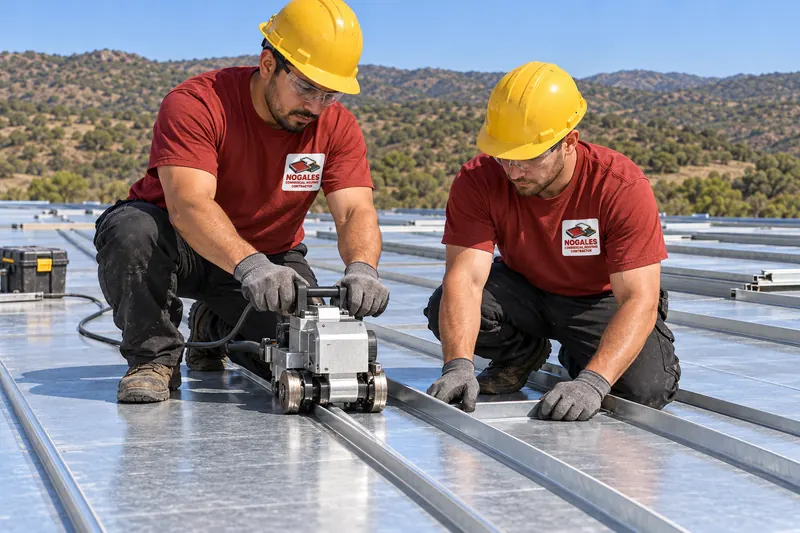
Standing seam, structural panels, fastener work, and retrofit framing on steel buildings.
Best For
Look Elsewhere
Slope, interior use, and rooftop traffic narrow the choice before the inspection settles it.
| System | Roof Slope | Seam Method | Surface Heat | Rooftop Traffic |
|---|---|---|---|---|
| TPO | Flat to low slope | Hot-air welded | White, reflective | Handles service traffic with walkway pads |
| EPDM | Flat to low slope | Taped and adhered | Black or white | Best with light traffic |
| Industrial | Flat through steep | Welded, taped, or seamed | Set by the system chosen | Reinforced paths and curbs |
| Metal | Low slope to steep | Standing seam or fastened | Light or coated finishes | Walk at the purlins only |
Call and describe the roof surface, the slope, and what sits on top of it. Most systems can be identified from that, and the next step follows from there.
+1 (623) 310-0169The system changes from building to building. These four steps stay the same.
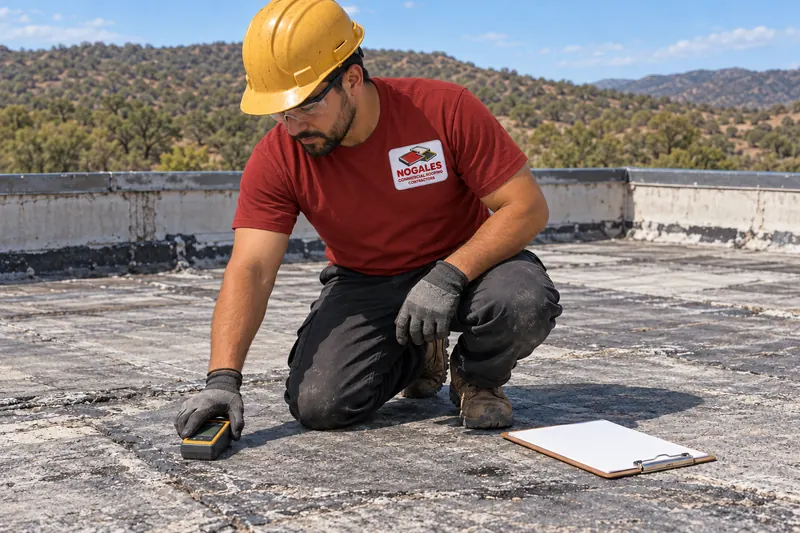
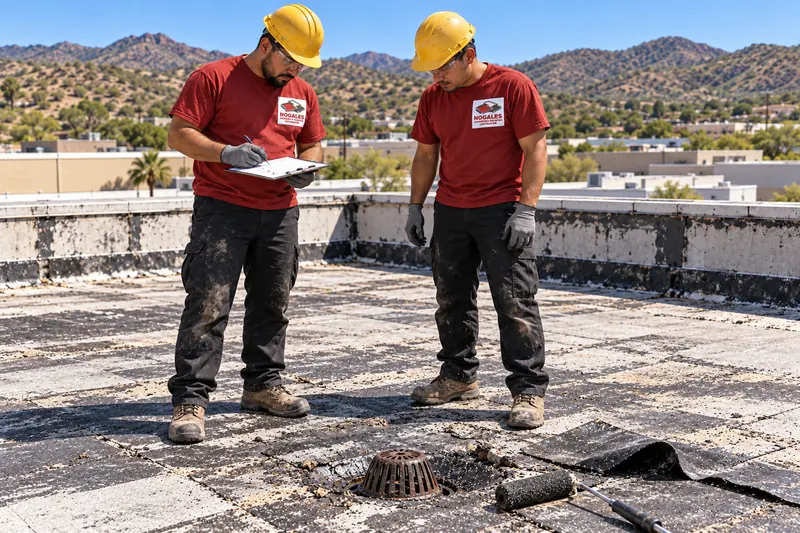
A full walk with moisture readings and photos tells us what system is on the roof, what failed, and how far the water spread under it.
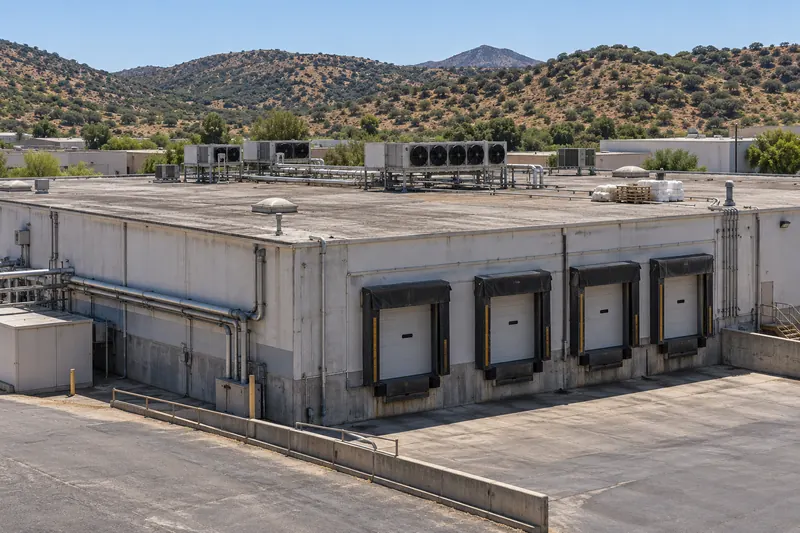
Roof slope, interior use, and equipment narrow the choice. You get the options side by side, with the repair, recover, or replace call for each.
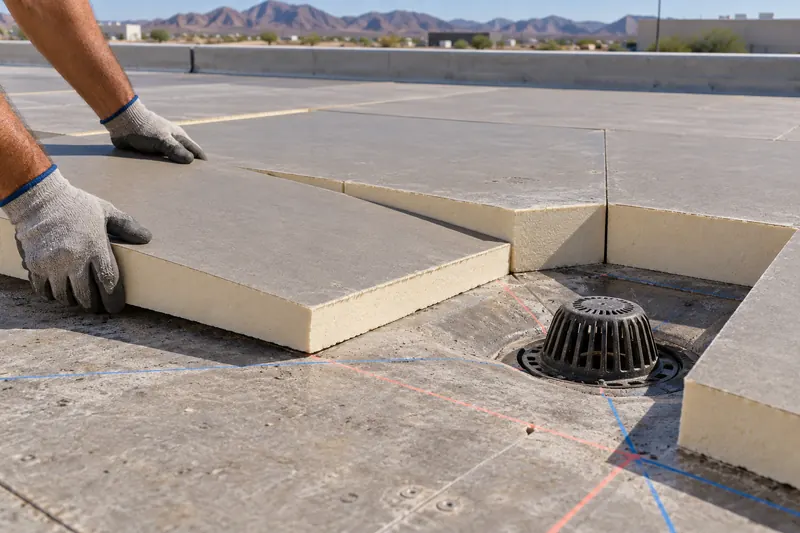
Wet material comes out, insulation and slope get rebuilt, and the new roof goes on section by section with every curb and edge flashed.
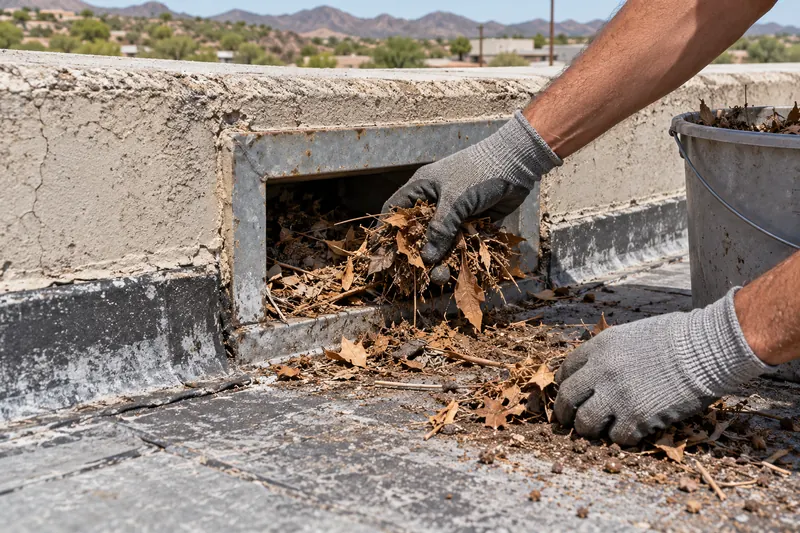
Drains get cleared, seams and fasteners checked, and the roof walked with you. Any loose detail is fixed before the last section closes.
Slope, interior use, cooling load, and rooftop equipment decide it. Produce warehouses and cold storage get white TPO in most cases. Older low-slope retail or offices take TPO or EPDM, set by the deck and the penetrations. Equipment-heavy plants get reinforced membranes, steel buildings get standing seam, and lightly cooled shops can take EPDM or metal.
TPO runs about 20 to 30 years, EPDM about 25 to 30, and commercial metal often 40 years or more. Install quality, drainage, upkeep, and sun exposure move each roof within its range, and regular inspections with quick repairs help it reach the upper end.
Both. Many calls end with a repair at a curb, seam, or drain. Replacement comes up when wet insulation spreads, the membrane turns brittle, or patches fail faster than they go on.
Yes. A metal building with a low-slope addition can carry panels on one section and TPO on the other, tied together with flashing at the transition.
Roof access details, past repair or warranty records, the approximate roof size if you know it, and where leaks show up inside. Photos of ceiling stains help too.
We confirm with the City of Nogales, the Town of Patagonia, or the county building office what the scope requires before work starts, and build that step into the plan.
Start with the roof size and how the building is used. The inspection narrows it down from there.
Leave your name and number and we will call you back about the building.
Or call now: +1 (623) 310-0169