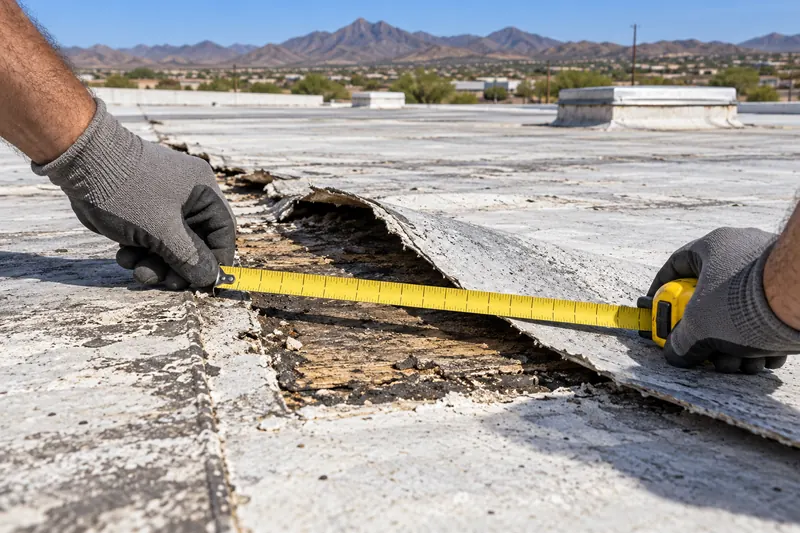
Edges Lifting In Open Wind
With no buildings around to break the wind, perimeter edges take the full force of monsoon gusts. Lifted metal lets wind under the membrane.

As an Amado commercial roofing contractor, we repair and replace roofs on roadside commercial and ag-related buildings along I-19, where the county line and wind shape the job.
Amado is unincorporated and sits mostly in Santa Cruz County, with some parcels at the north end falling in Pima County. Permits come from the Santa Cruz County Building Department or Pima County Development Services, and the county assessor record shows which one applies.
Buildings along the I-19 frontage also face open-country wind and blowing dust. Dust holds moisture against the membrane, and wind finds every loose edge.
Wind, dust, and distance shape the four problems we see most on these roofs.
With no buildings around to break the wind, perimeter edges take the full force of monsoon gusts. Lifted metal lets wind under the membrane.
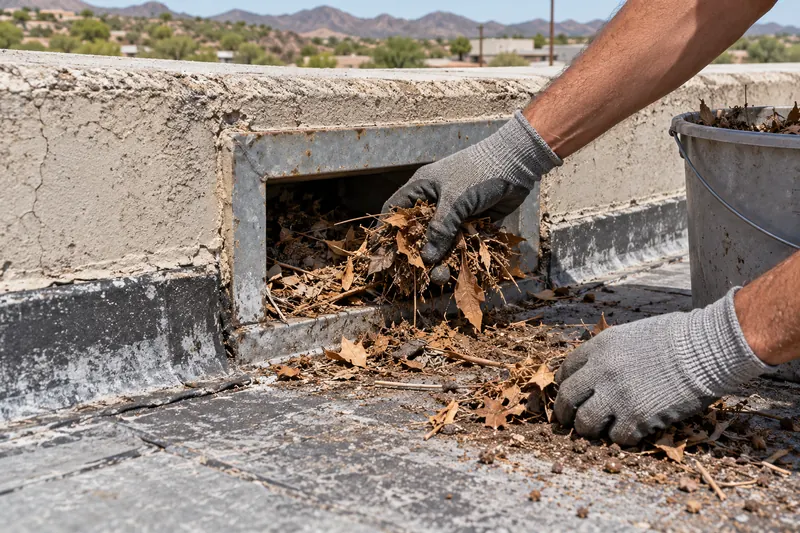
Blowing dust settles in drains and scuppers and turns to mud in the first storm. Outlets clog and water stands on the roof.
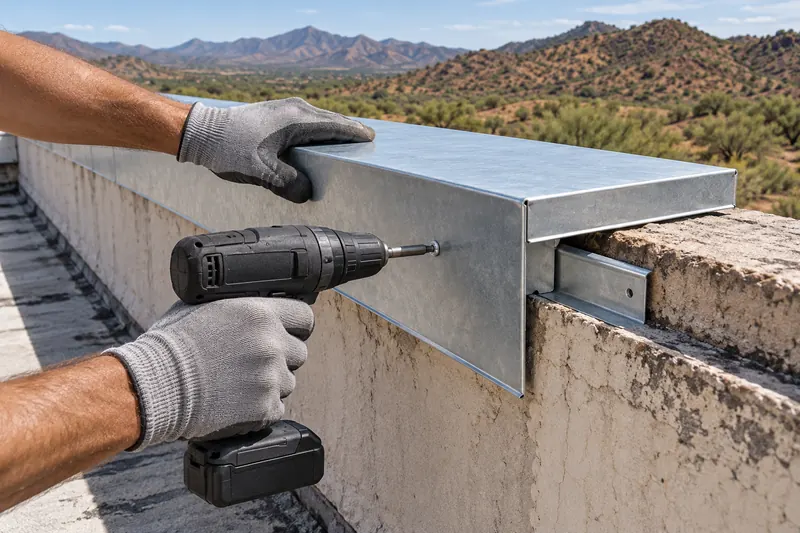
Coping on exposed parapets loosens as wind flexes it. Missing fasteners leave gaps where rain drives into the wall.
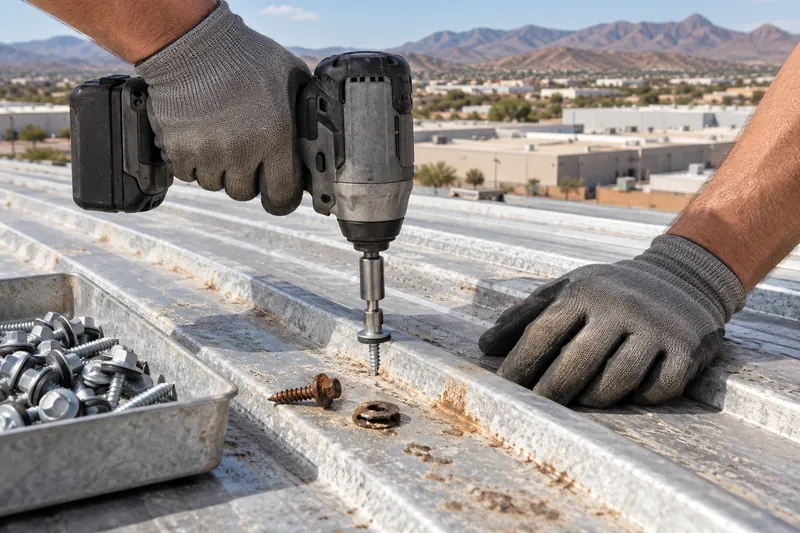
Metal storage and ag-related buildings lose screw grip and washer seal over hot and cold seasons. Each loose screw is a pinhole leak.
Open-country roofs need details built for wind and dust from day one.
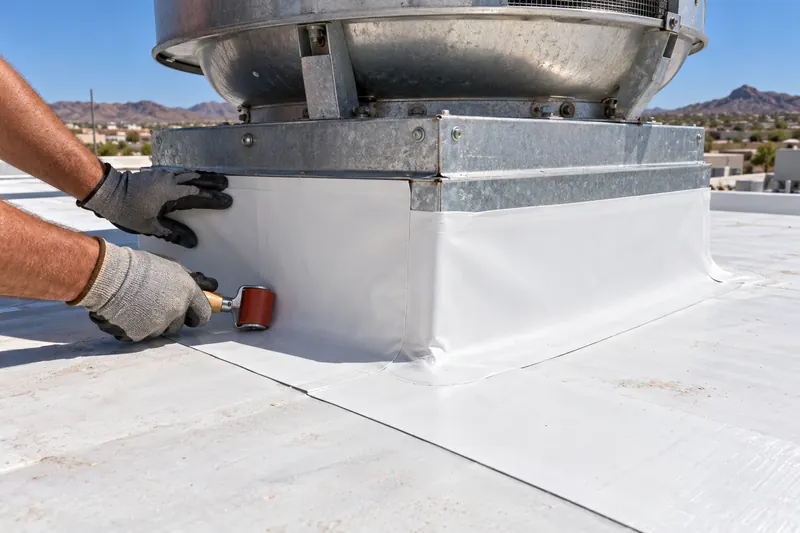
Roadside commercial and ag-related buildings here take metal or a white membrane.
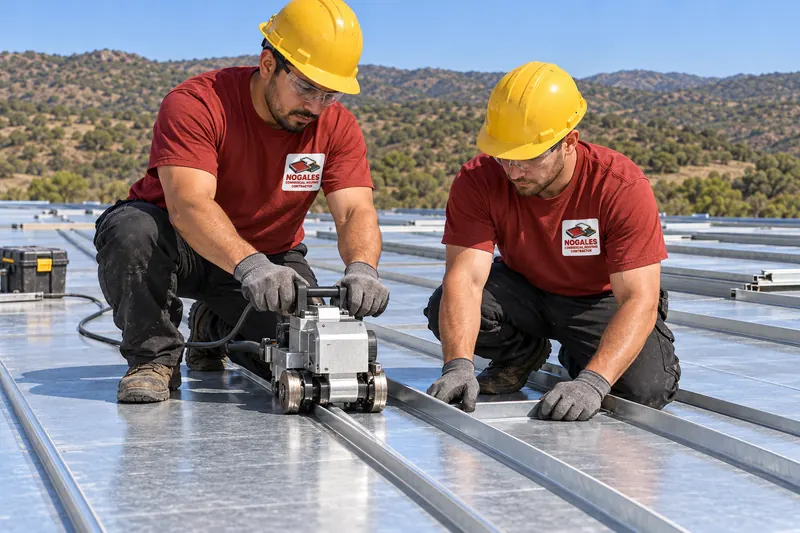
Panels and fastener work for ag-related storage and steel roadside buildings, attached for open-country wind.
Commercial metal roofing in Nogales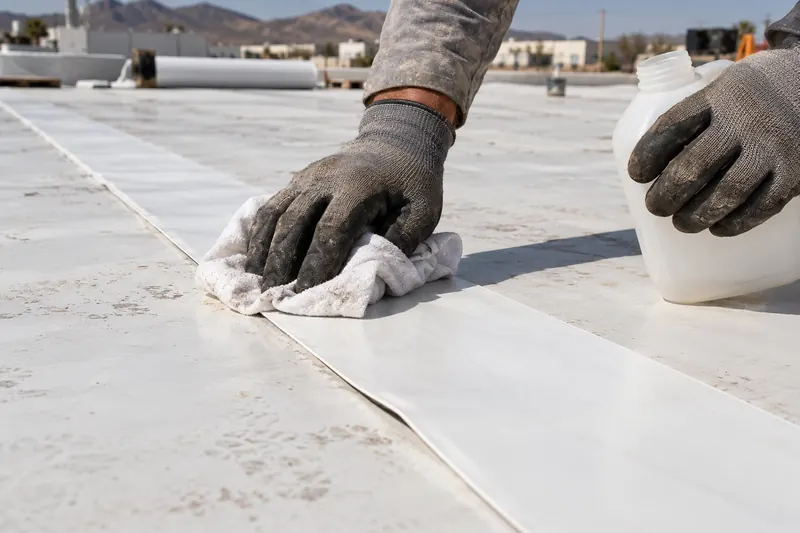
White welded membrane for roadside commercial buildings with cooled space and flat roofs.
TPO roofing in Nogales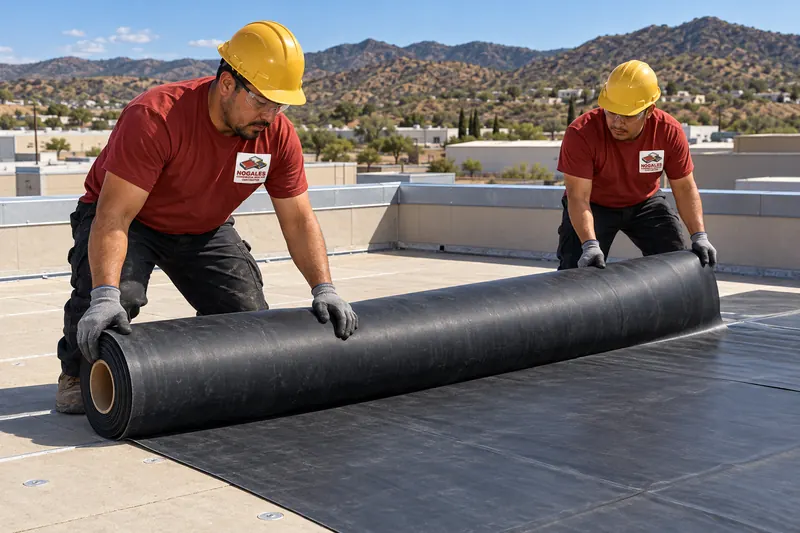
Fully adhered rubber membrane for small flat roofs on shops and storage, with edges fastened for open wind.
EPDM roofing in NogalesCall and tell us which side of the building faced the wind. We secure loose edges first to stop the damage from spreading, then plan the full repair.
+1 (623) 310-0169Distance and wind exposure add two planning steps to the usual sequence.
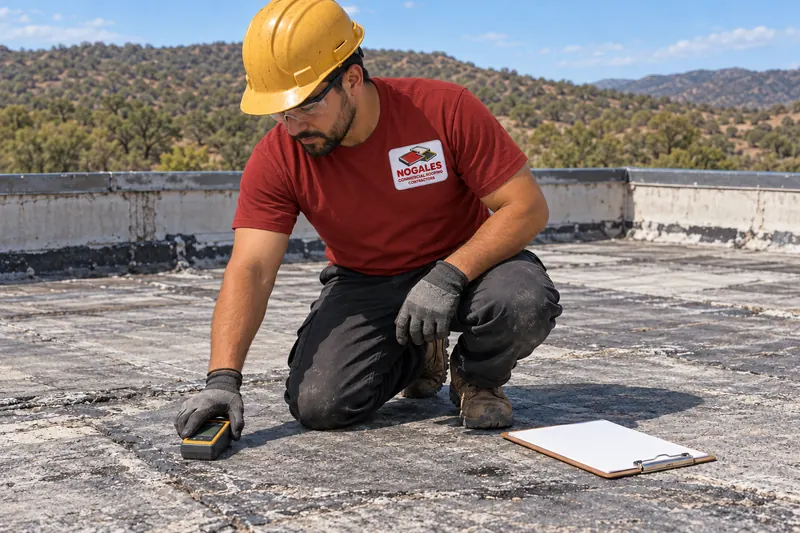
We check edges, coping, drains, and fasteners, clear dust to see the membrane, and take moisture readings. The assessor record confirms which county issues the permit.
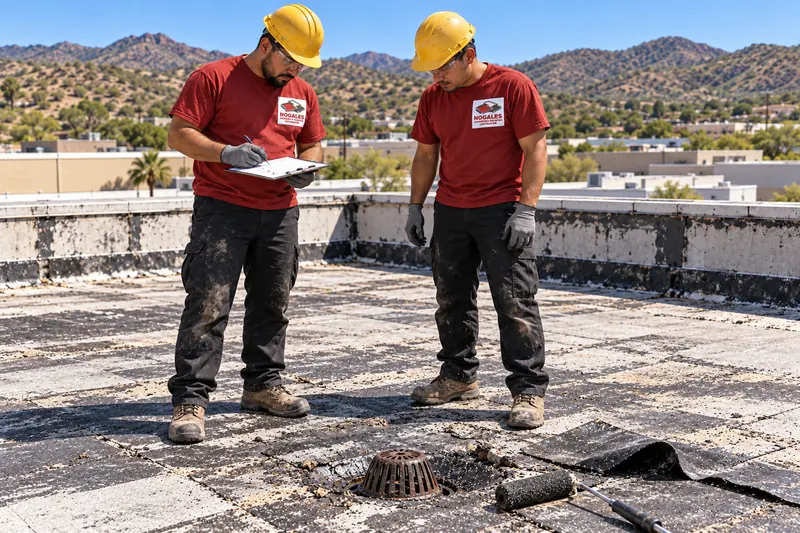
Edge attachment is set for open exposure, and lifts and dumpsters are placed away from the frontage road so customers can still pull in.
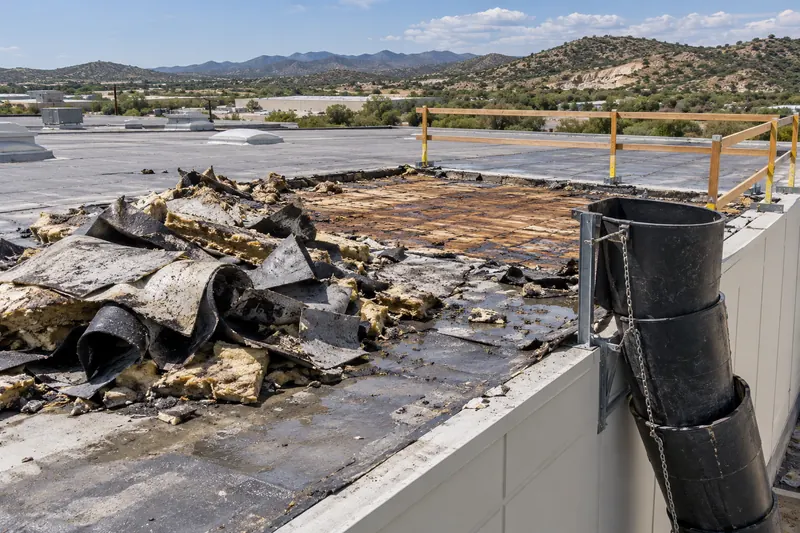
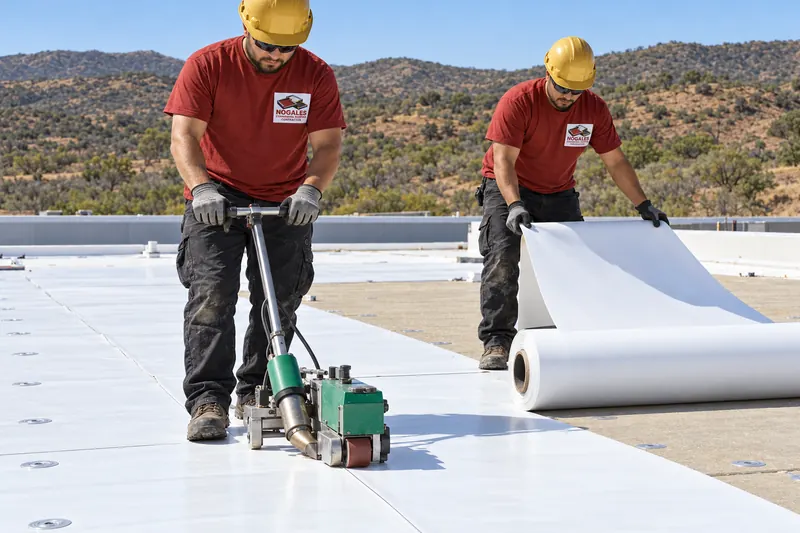
Wet boards and failed membrane or panels come off in sections, with the open area tarped against afternoon wind.
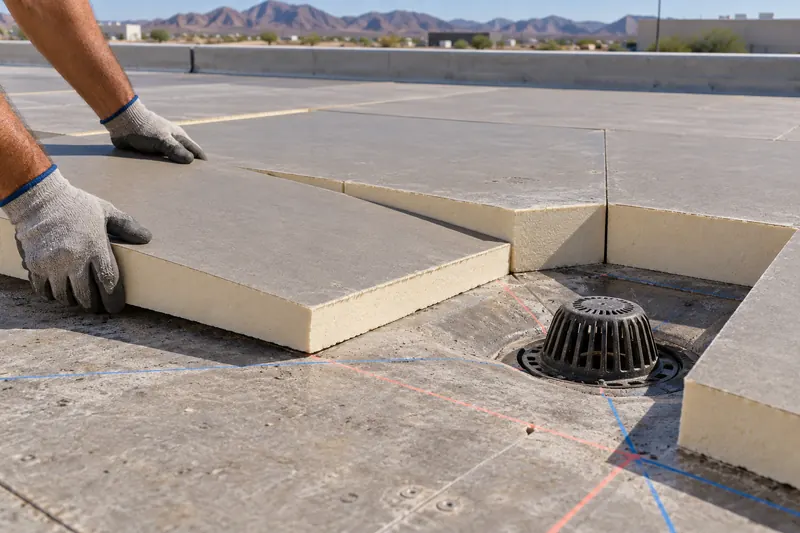
New insulation and membrane or panels go down, then edge metal and coping are fastened at tight spacing and drains get new guards.
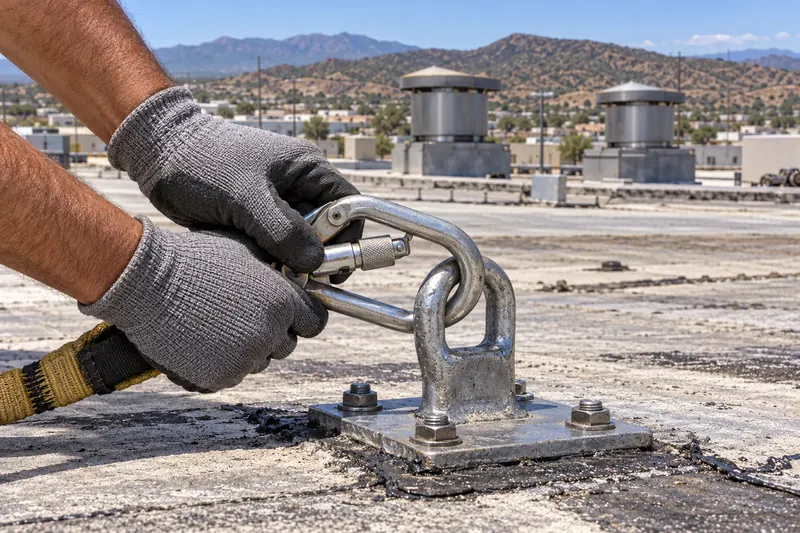
Tied off at the roof anchors, we walk every edge and drain, pull-test a few edge fasteners, and go over the finished roof and its upkeep with you.
Amado marks the north end of the I-19 corridor we cover.
Historic zone roofs a few miles south.
Small commercial roofs farther south on I-19.
Distribution buildings near the south end of I-19.
Town-area roofs off SR 82 from Nogales.
The National Weather Service office in Tucson defines Arizona's monsoon as June 15 through September 30, with sudden heavy rain, downburst winds, blowing dust, and sometimes hail.
On open roadside roofs those storms expose clogged drains, loose edge metal, seams that leak only in driven rain, and dust holding moisture on the membrane. A check in May or early June leaves time to fix weak spots.
Most Amado parcels are in Santa Cruz County, and some at the north end are in Pima County. The county assessor record for your parcel shows which one applies, and we confirm with that office before work starts.
Edge metal and coping get tighter fastener spacing, perimeter and corner zones of the roof get extra attachment, and loose-laid systems stay off exposed buildings. Corners take the highest wind pull, so membrane there is fastened closer and flashed with an extra layer.
Dust holds moisture against the membrane after rain and feeds plant growth in drains. It also hides small splits and lifted laps, so we clear it during inspections to see the surface. Rinsing the roof and clearing outlets each spring keeps the first monsoon storm from turning that dust into mud dams.
Yes. Metal storage, equipment, and processing buildings get fastener replacement, new trim, new panels, or a membrane roof on flat sections. Open-sided equipment sheds also get closure strips at the eaves so wind-driven rain and dust stay out of the panel ribs.
Often, when the deck is dry and the damage sits at the edges and drains. Re-fastened edge metal, new coping, and rebuilt outlets fix most wind and dust problems. When cores find wet insulation under large areas, a new roof costs less than chasing leaks along the frontage.
Usually, yes. Staging stays off customer parking and the entrance, and noisy work can be timed away from your busiest hours. Signs at the entrance point drivers around the lift, and the work area gets swept at the end of each day.
Look from the ground for lifted edge metal, flapping membrane, or missing coping, and check inside for new stains. Call before the next storm so loose edges get secured first.
Tell us the building type and which side faces the open wind. We start with the edges, drains, and the county check.
Leave your name and number and we will call you back about the building.
Or call now: +1 (623) 310-0169