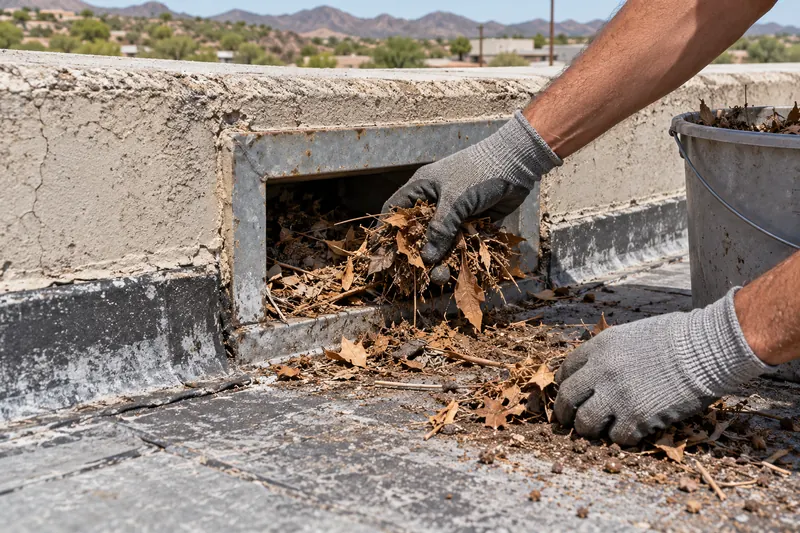
Packed Scuppers
Monsoon rain carries grit and leaves to the scuppers. When they clog, water backs up over seam tape that was never meant to sit under a pond.
As an EPDM roofing contractor in Nogales, we install, replace, and repair rubber roofs on shops, storage buildings, and older low-slope retail, with taped seams and flashed penetrations.
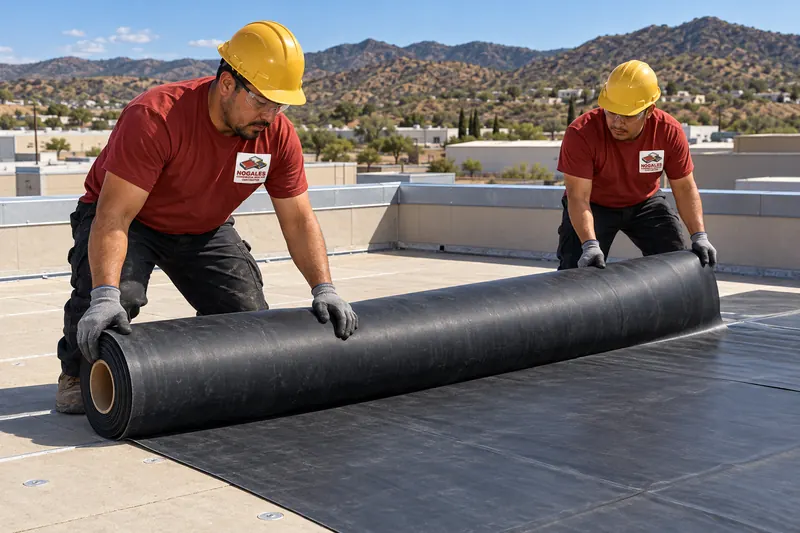
EPDM earns its place on roofs that move with the seasons or carry a crowd of pipes and vents.
Rubber roofs fail at their details long before the open sheet wears through.
Monsoon rain carries grit and leaves to the scuppers. When they clog, water backs up over seam tape that was never meant to sit under a pond.
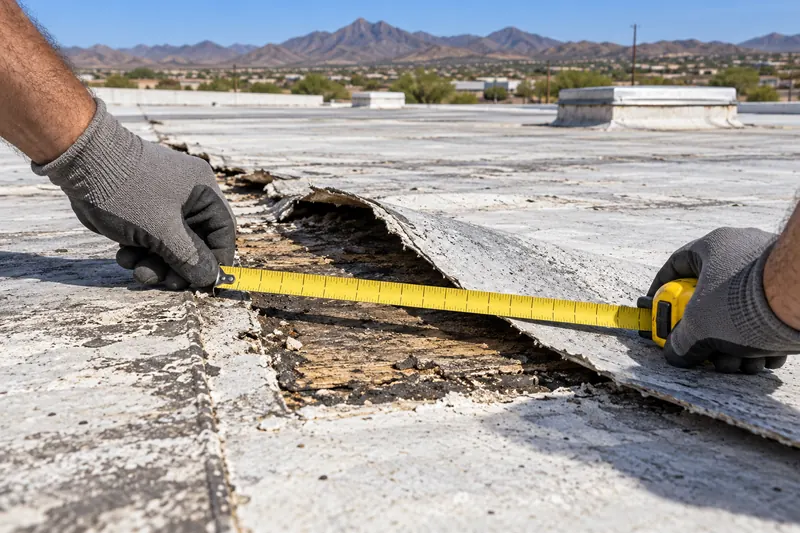
Older EPDM shrinks and tugs at the perimeter, bridging inside corners and pulling termination bars loose along the edge.
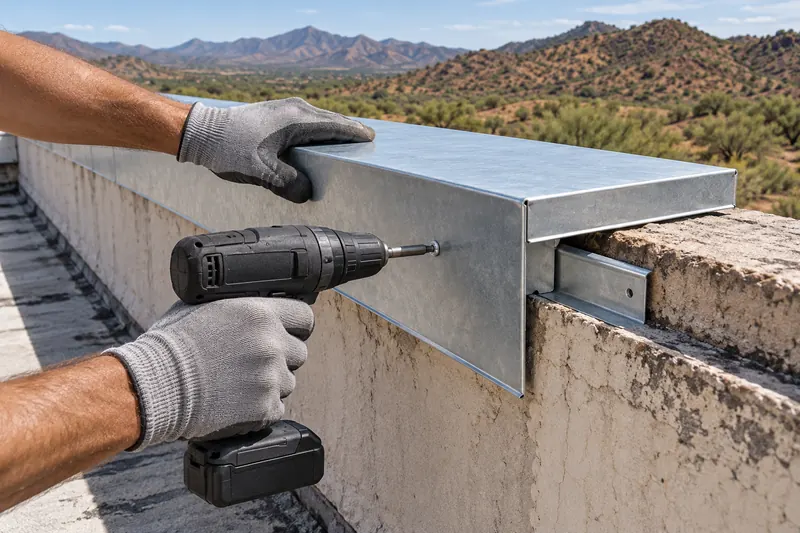
Coping caps hold the top of the wall flashing. When their fasteners back out in the wind, rain gets behind the rubber at the top edge.
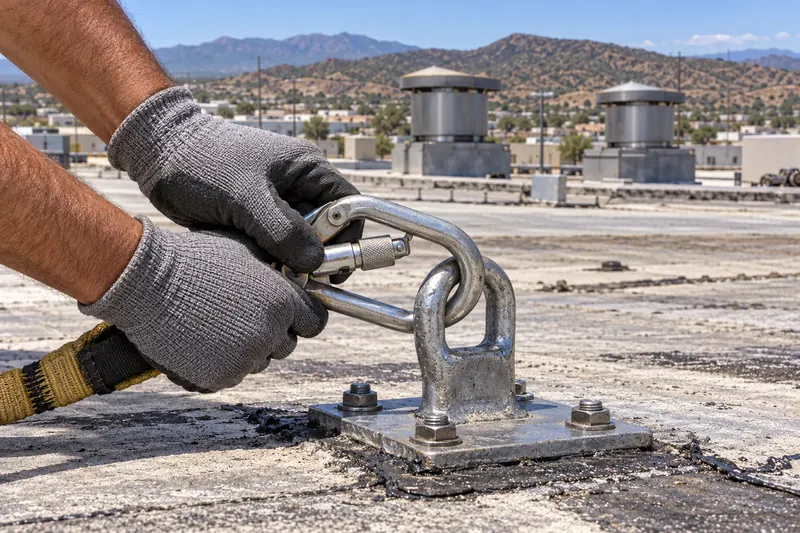
Anchor plates, vents, and pipes punch through the sheet. Their flashings crack before the field does, and a cracked boot sends water straight to the deck.
Four choices set how an EPDM roof is built and how it ages here.
| Choice | What It Means | When We Use It |
|---|---|---|
| Black or white sheet | Black absorbs heat; white EPDM reflects it | Black over shops and storage, white over cooled space |
| Fully adhered or ballasted | Glued to the cover board, or held down with stone | Adhered on most roofs; ballast where the structure was built for it |
| Seam tape and cover strips | Primed laps closed with tape, then stripped at cut edges | Every EPDM lap, checked again before monsoon |
| Repair, recover, or replace | Patch the details, go over a dry roof, or strip to the deck | Set by cores, shrinkage, and how many layers exist |
Rubber roofs earn their keep in a few specific places on a building.
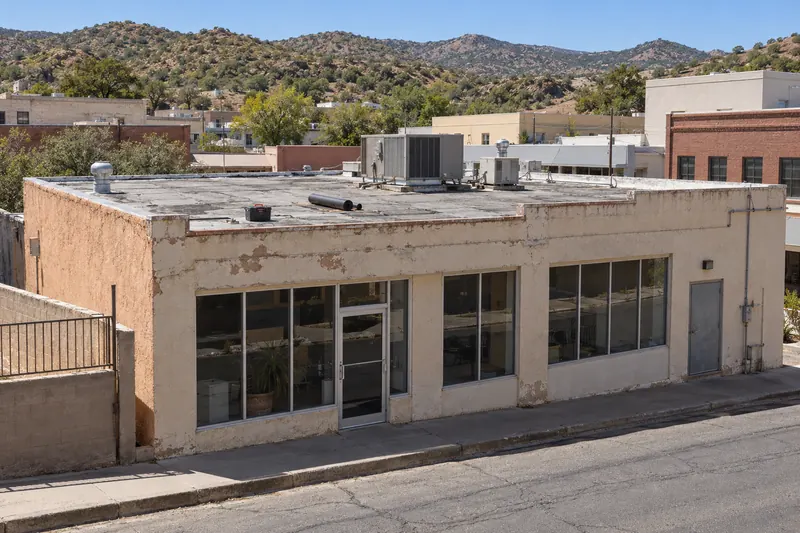
Call and describe where the sheet has lifted or the corners have opened. Photos from the ground or the hatch help us bring the right flashing materials on the first trip.
+1 (623) 310-0169Each step targets the details where rubber roofs tend to leak, starting with a full look at the old roof.
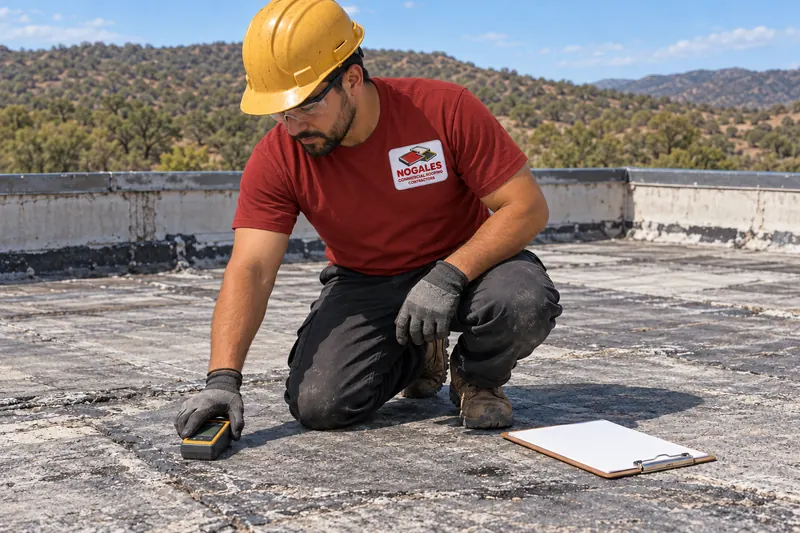
We probe the old laps, check corner flashings and drains, and take moisture readings across the field. Shrinkage at the edges and soft insulation both get mapped.
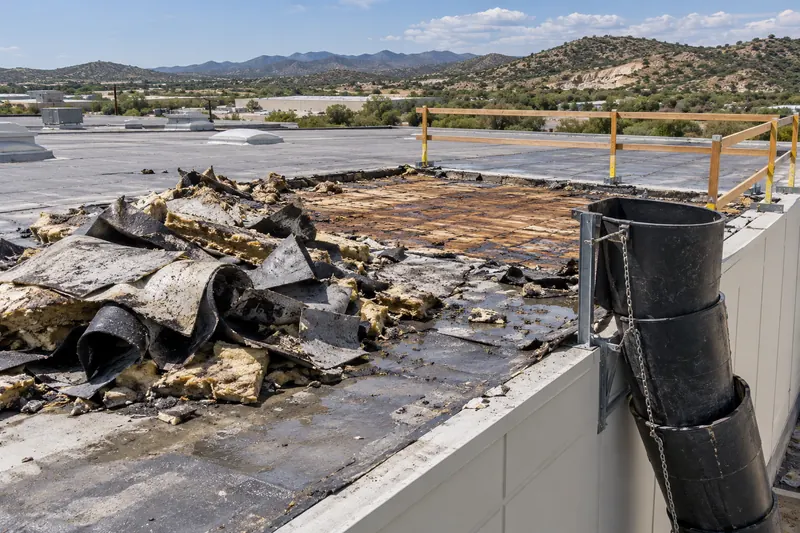
Failed membrane and wet boards come off to a dry deck. Ballast stone, where there is any, gets moved and staged where the structure can carry it.
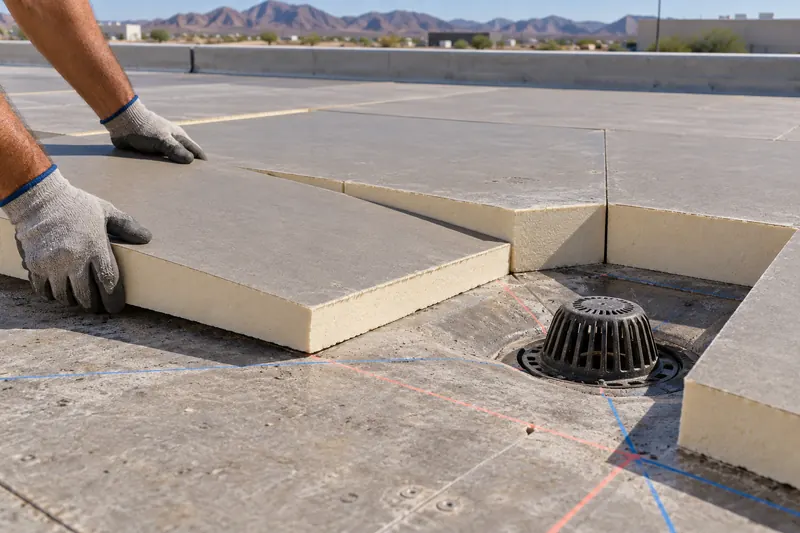
New insulation and a smooth cover board give the rubber a clean, flat surface. Tapered pieces build slope toward drains that used to pond.
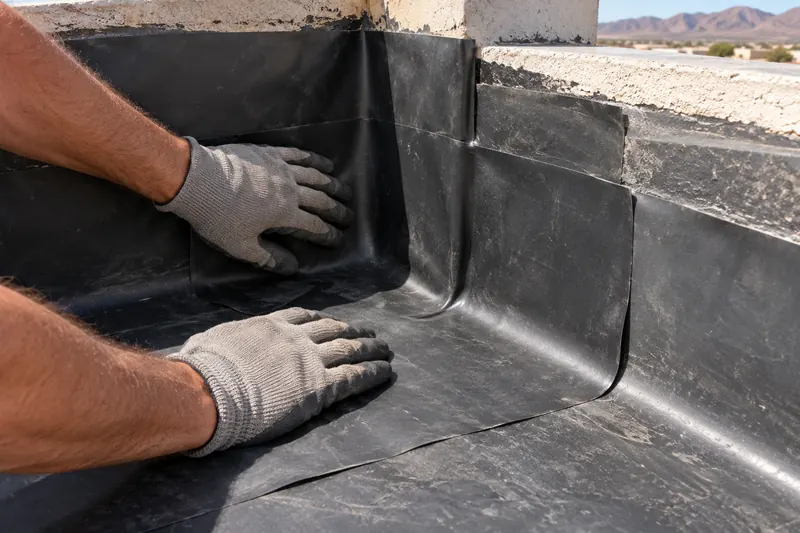
Sheets are rolled out, relaxed, and adhered. Laps get primer and seam tape, and inside corners, curbs, and pipes get flashed with pre-formed pieces.
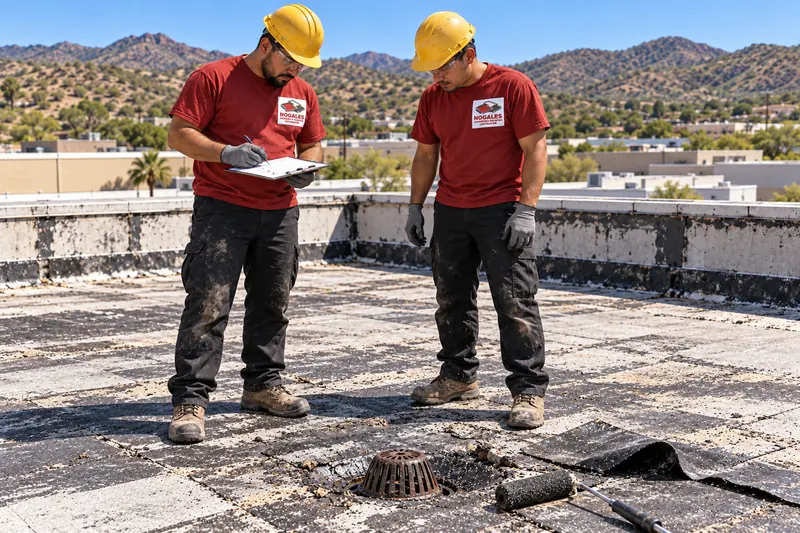
Each lap edge is checked by hand and sealed where needed. Drains and scuppers are cleared, and you get a walk-through of the roof before the job closes.
Some buildings near an EPDM roof call for a different system.
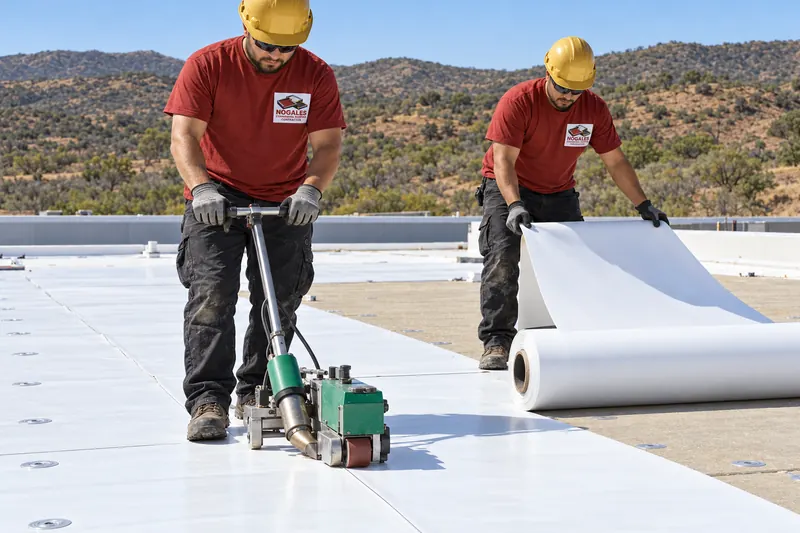
A white welded sheet for cold storage, retail, and offices, where reflectivity and long straight seams matter most.
TPO roofing in Nogales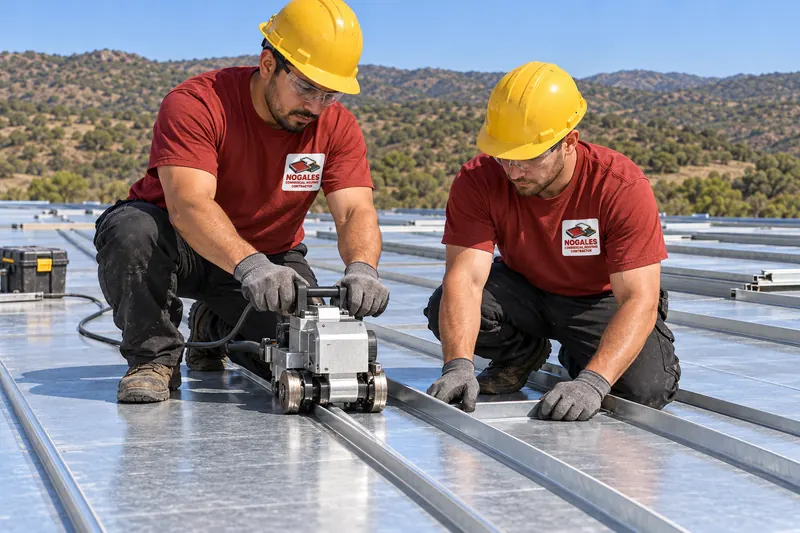
Panels for pitched steel buildings, or framing that adds slope over a flat rubber roof that keeps ponding.
Commercial metal roofing in NogalesWhen the roof sees big temperature swings, crowded penetrations, or odd shapes, EPDM is the stronger pick. Rubber stays flexible through cold nights and hot afternoons. Black EPDM fits storage, shops, and ballasted roofs with modest cooling, and white EPDM is there for owners who want reflectivity. Taped seams need checking before every monsoon.
Yes, if the deck and insulation below are dry. Open laps get cleaned, primed, and re-taped, and failed corners get new flashing. Shrinkage that pulls the sheet tight at every wall shows the membrane is near the end, and replacement starts to cost less than chasing repairs.
Rubber membranes lose a little size as they age in strong sun. The pull shows up first at parapets and curbs, where the sheet bridges the corner and lifts off the wall. Re-flashing those spots buys time; heavy shrinkage across the roof calls for a new sheet.
Over storage or a shop with little cooling, black EPDM works well. Over offices, retail, or coolers, the heat it absorbs adds to the cooling load, so we steer those roofs toward white EPDM or TPO.
Each lap is cleaned and primed, then closed with seam tape that bonds the two sheets. Cover strips go over field-cut edges, and pre-formed pieces finish corners and pipes. Seams get a hand check along their full length.
Ballast stone holds a loose-laid EPDM sheet down by weight. It only goes back on roofs whose structure was built for it, and wind exposure at the edges decides how much paver or extra stone the perimeter needs.
A dry, smooth surface. Wet insulation comes out, low spots get tapered fill, and a cover board goes down so fasteners and board joints stay hidden under the rubber. Drains are reset to the new roof height.
Send the roof size and what you see at the walls, corners, and drains. We start with an inspection of the laps and flashings.
Leave your name and number and we will call you back about the building.
Or call now: +1 (623) 310-0169