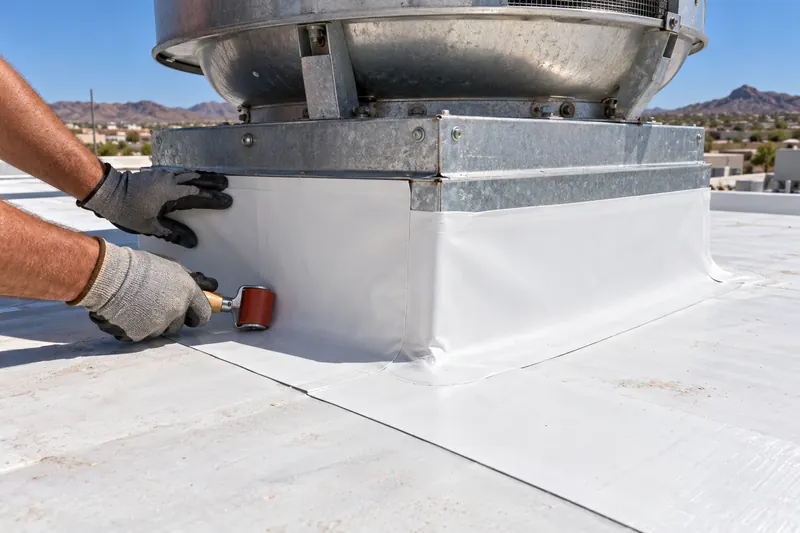
Cracked Flashing At Exhaust Curbs
Large fans vibrate their curbs all day. Flashing at the base splits, and the opening sits right where condensate and storm water collect.
As an industrial roofing contractor in Nogales, we roof distribution centers, cross-docks, and plants in phased sections, with reinforced details at heavy curbs, stacks, and skylights.
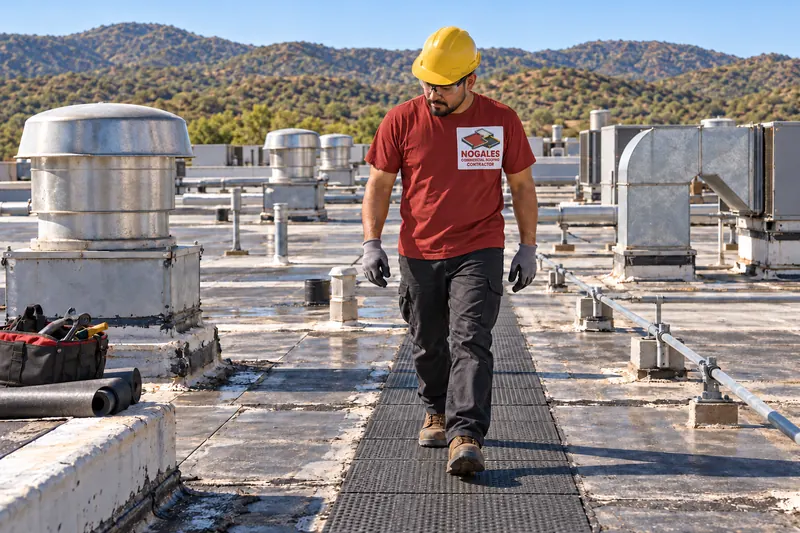
Size and equipment load set industrial roofs apart from a typical retail roof.
Heavy equipment and big roof areas create problems smaller roofs rarely see.
Large fans vibrate their curbs all day. Flashing at the base splits, and the opening sits right where condensate and storm water collect.

Wide roofs send a lot of water to each outlet in a monsoon burst. One clogged drain backs water across thousands of square feet.
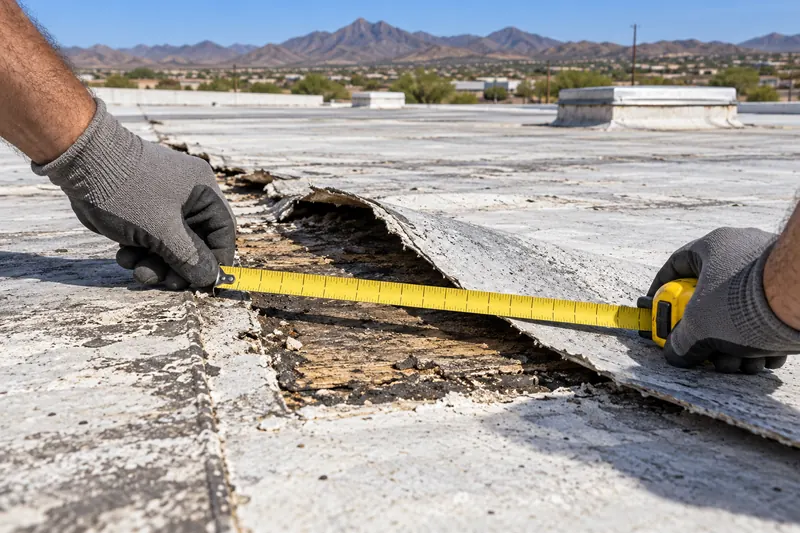
Downbursts hit the long edges of a big flat roof hardest. Lifted perimeter sheets tear at the fastener plates unless they are caught early.
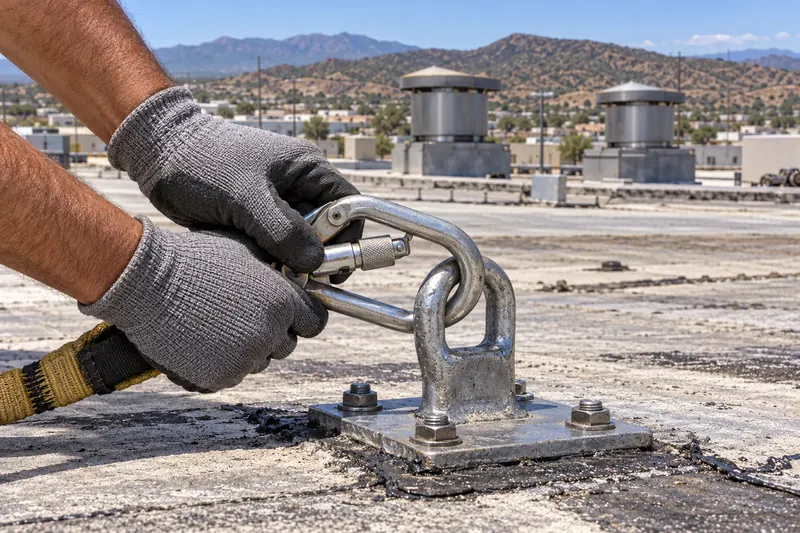
Tie-off anchors, pipe supports, and sign brackets all pass through the roof. Each one needs its own flashing and becomes a leak point once sealant dries out.
Four approaches cover most large roofs, often mixed on one building.
| Approach | How It Works | Where It Fits |
|---|---|---|
| Phased tear-off | Open, rebuild, and close one roof zone at a time | Buildings that run every shift with docks in use |
| Recover over dry areas | New insulation and membrane over a roof with dry cores | Large roofs where wet areas are small and mapped |
| Reinforced TPO or EPDM | Heavier sheets and extra layers at curbs and paths | Plants with heavy equipment and frequent service |
| Metal over the structure | Panels or retrofit framing on pre-engineered buildings | Steel buildings and roofs that need added slope |
A phased plan protects the operation below as much as the roof above.
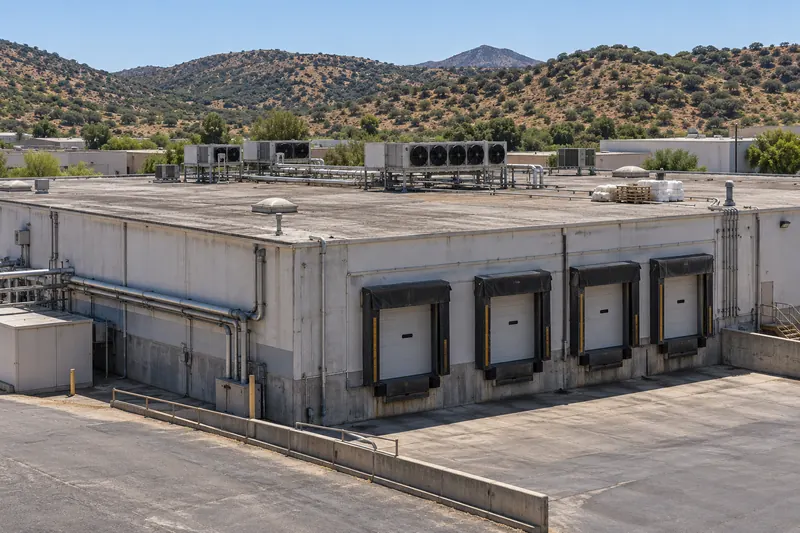
Call with the building size, where water reaches the floor, and when the area is busiest. We plan the first visit around your shifts and shipping windows.
+1 (623) 310-0169Large roofs are worked zone by zone so production and shipping keep running below.
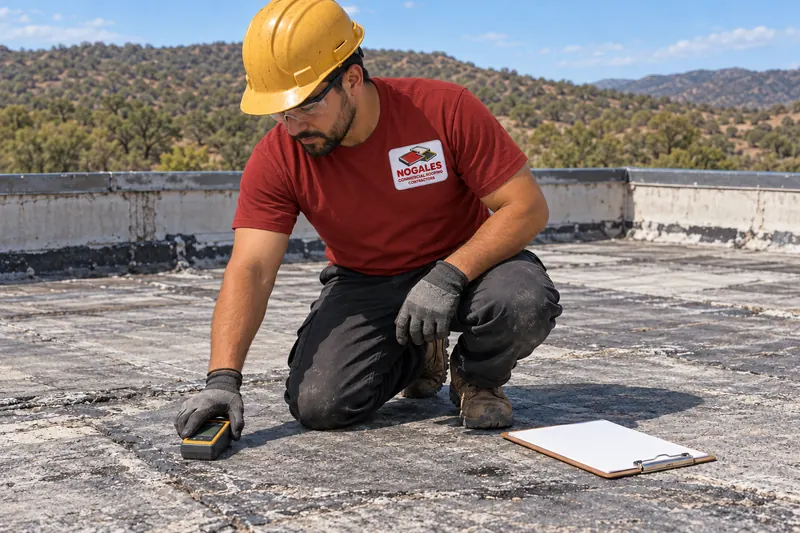
A roof walk with moisture scans, cores, and a count of every curb, stack, skylight, and drain. We also note anchors, access points, and where lifts can set up safely.
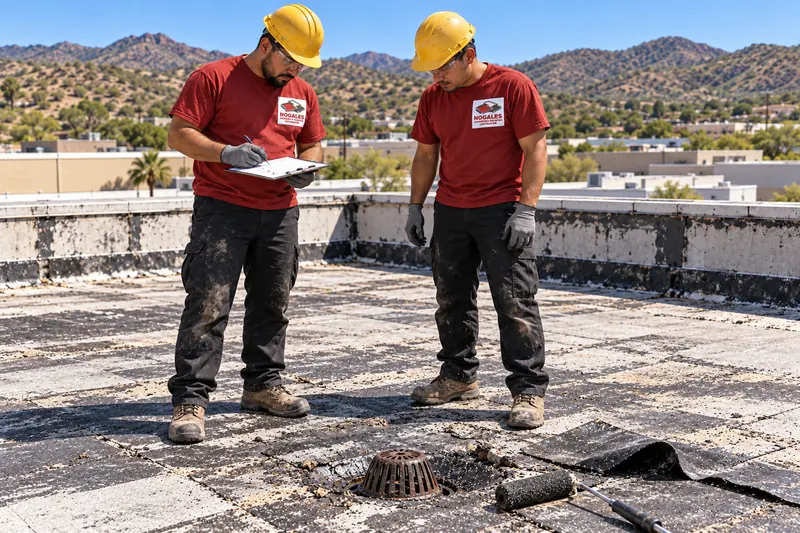
The roof is split into zones that can be opened and closed in a working day. Each zone is matched to your shift, dock, and delivery schedule.
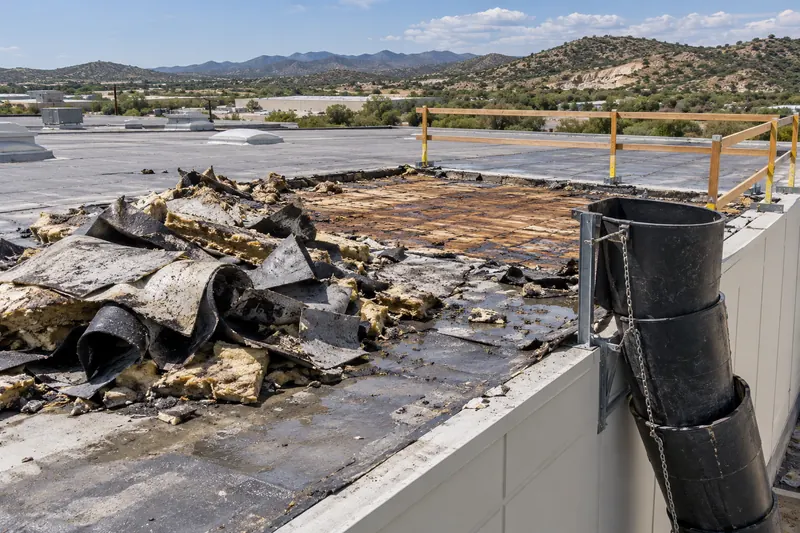
Wet boards and failed membrane come off one zone at a time, and debris goes down a chute away from truck lanes and entrances.
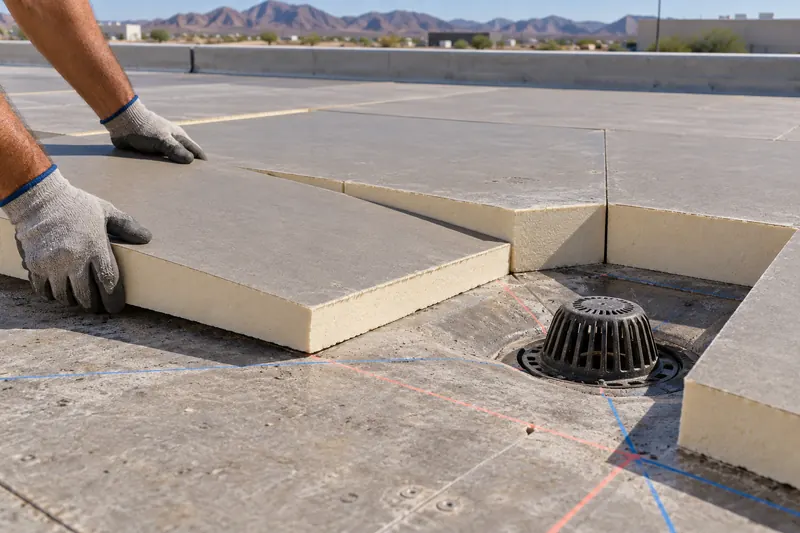
New tapered insulation adds slope where the wide roof held water. Reinforced membrane goes on, with extra layers at curbs, stacks, and walk paths.
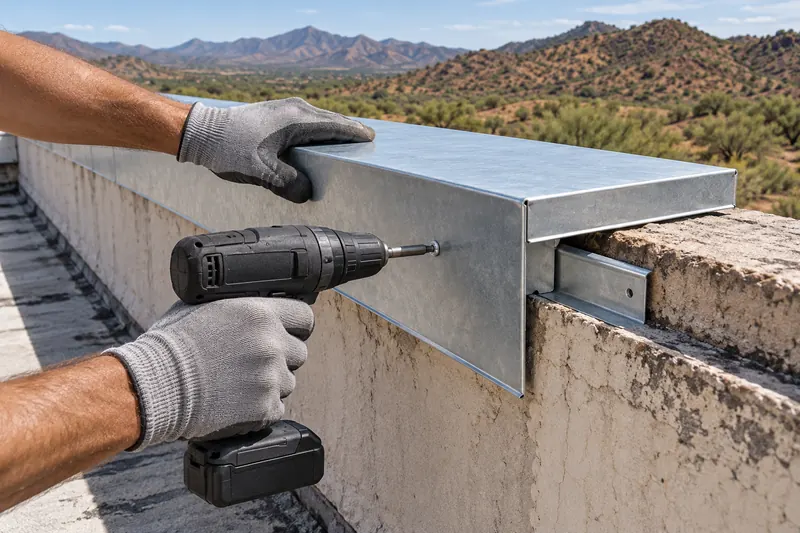
Edge metal, coping, and anchors get flashed before the zone is closed. Seams are checked and drains cleared, then the next zone opens.
Most plant and warehouse roofs here end up as one of these two systems.
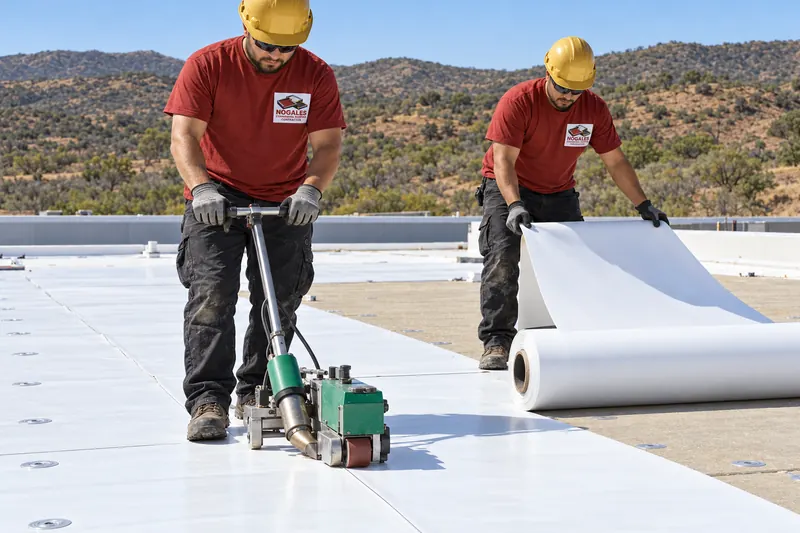
Reinforced white TPO for cooled plants and distribution centers where long welded runs cover the roof quickly.
TPO roofing in Nogales
Standing seam and retrofit framing for pre-engineered steel buildings and plants that need slope added.
Commercial metal roofing in NogalesDistribution centers, cross-dock buildings, manufacturing shells, and equipment-heavy plants. These roofs cover large spans and carry more fans, stacks, and skylights than a retail roof. Work on them centers on tear-off or recover decisions across big areas, phasing around docks, reinforced curb details, and drainage for heavy storm runoff.
In most cases, yes. Only the zone we can close up that day gets opened, noisy tear-off is timed around peak shipping, and lifts and dumpsters go where trucks and parking stay clear. In monsoon months we watch afternoon storm forecasts and dry in early.
Curbs get reinforced membrane and extra flashing layers, and walk paths get pads. Where exhaust carries oil or grease, we pick a membrane that holds up to it. Units that need to be lifted are scheduled with your mechanical contractor.
Yes. We follow the plant sign-in, permit, and escort rules, plan tie-off points before work starts, and keep debris chutes and lifts away from forklift and truck routes. Hot work near stacks or process vents is scheduled with your safety lead, and the roof edge around open zones gets warning lines.
Core samples decide it. A recover saves the cost of hauling off dry areas, and it works only where the insulation is dry and the deck has room for another layer under code. Wet zones always come out.
Tapered insulation, crickets between drains, and overflow scuppers sized for heavy bursts. We check that every outlet has a clear path to its downspout and add drains where the old layout left low areas.
They can, and each one gets new curb flashing tied into the new membrane. Cracked or crazed skylight domes are best replaced while the roof around them is open, and screens or guards over them go back on before the zone closes.
Duration tracks roof size, weather, and how many zones your operation can release at once. A phased plan lists each zone and its order before work starts, so you can plan shipping around it.
Share the building size, the equipment on the roof, and your busiest hours. We build the plan around your operation.
Leave your name and number and we will call you back about the building.
Or call now: +1 (623) 310-0169